
Frozen AC Repair Paradise NV
- 24/7 Emergency Service
- Financing Available
- A+ BBB Rated
- Licensed & Insured
Inside the Frozen AC Repair Process
Ice on an AC sounds wrong, especially in July. But it happens, and it happens for predictable reasons. When the evaporator coil temperature drops too low, moisture from the air begins freezing across the coil surface while the system continues running. What started as a thin frost can turn into a solid block of ice on the coil and copper line within hours. By the time most homeowners notice (warm air at the vents, water on the floor near the air handler, an AC that runs without cooling), the freeze has already been building for a while.
Repairing an iced-up system involves safely thawing the coil first, then diagnosing the underlying airflow or refrigerant issue that caused it. The thawing process takes time and has to be done carefully to avoid additional water or coil damage. Turn the AC off, run the fan on its own, wait two to four hours, sometimes longer. The real repair starts after the ice is gone. We check refrigerant pressure, inspect the coil, test the blower motor and capacitor, look at the filter, and check the drain. Most freezes trace back to one of three things: restricted airflow, low refrigerant from a leak, or a coil that has not been cleaned in years. The U.S. Department of Energy explains how those systems work together, and that is what we test against. Without diagnosing the root cause, the system will usually develop the same problem again. Maybe in a day, maybe in a week.

AC Repair
Broader residential AC system repair across refrigerant and airflow issues. Our main Paradise AC repair coverage.
See Details
Evaporator Coil Repair
Most frozen AC problems start with a coil issue. We diagnose the coil before recommending the fix.
See Details
AC Leak Repair
Low refrigerant from a slow leak is one of the most frequent freezing causes. We find the leak and fix it properly.
See Details
Blower Motor Repair
Weak airflow from a failing blower is a common cause of coil freezing. We test airflow as part of frozen AC diagnostics.
See Details
AC Compressor Repair
Long freeze cycles damage the compressor over time. We catch the cause early to protect the compressor.
See Details
Freon Recharge
When the system is undercharged and needs refrigerant added back to spec. Our freon recharge service.
Neighborhoods We Serve Across Paradise
We repair frozen AC units in homes across Paradise. Ice buildup is more common in older systems for three reasons: accumulated coil dust that restricts airflow, original R-22 refrigerant that is sensitive to undercharge, and dirty filters in rental properties where filter changes get missed. Our technicians identify the underlying issue so the system does not continue repeating the same icing problem.
- Enterprise
- Whitney
- Winchester
- Elk Horn
- Tule Springs
- Green Valley
Not on the list? Contact us and we’ll confirm whether we can reach you.
The Pure Plumbing & Air Difference for Paradise Homeowners
Frozen AC calls require patience and proper diagnostics. Removing the ice is only the beginning of the repair process. Finding what caused the freeze and fixing it correctly is what keeps the system running. Pure Plumbing & Air has been repairing frozen AC units across Paradise and the surrounding valley since 2013. We test refrigerant levels, airflow, and coil condition so the underlying issue is fully corrected before the system is restarted.
We carry refrigerant on the truck and all refrigerant work is handled according to EPA requirements. Many frozen AC issues come from a leak somewhere in the refrigerant circuit, and the source is diagnosed before refrigerant is added back to the system. Pricing is honest. We tell you the cost on the phone before dispatch and again before we start work. No surprises at the door. Pure Plan Membership applies discounts on parts. Refrigerant charge is verified through superheat and subcooling measurements rather than simply adding refrigerant until gauge pressures appear normal. From Paradise Palms to Maryland Parkway, our techs hold Nevada contractor licenses #77906 and #88741.
- Licensed HVAC technicians. Nevada contractor licenses #77906 and #88741.
- Root cause diagnostics. Refrigerant levels, airflow performance, coil condition, and blower operation are all checked during diagnostics.
- EPA-compliant refrigerant handling. All recovery and recharge done by licensed techs.
- Leak detection. We find leaks before topping off refrigerant, not after.
- 24/7 availability. Cooling systems experiencing ice buildup during extreme heat are prioritized for faster scheduling when available.
- Pure Plan Membership available. Coil cleaning and filter changes during membership visits prevent most freezes.
HVAC Services We Offer Includes:

Frozen AC Repair FAQs From Paradise Homeowners
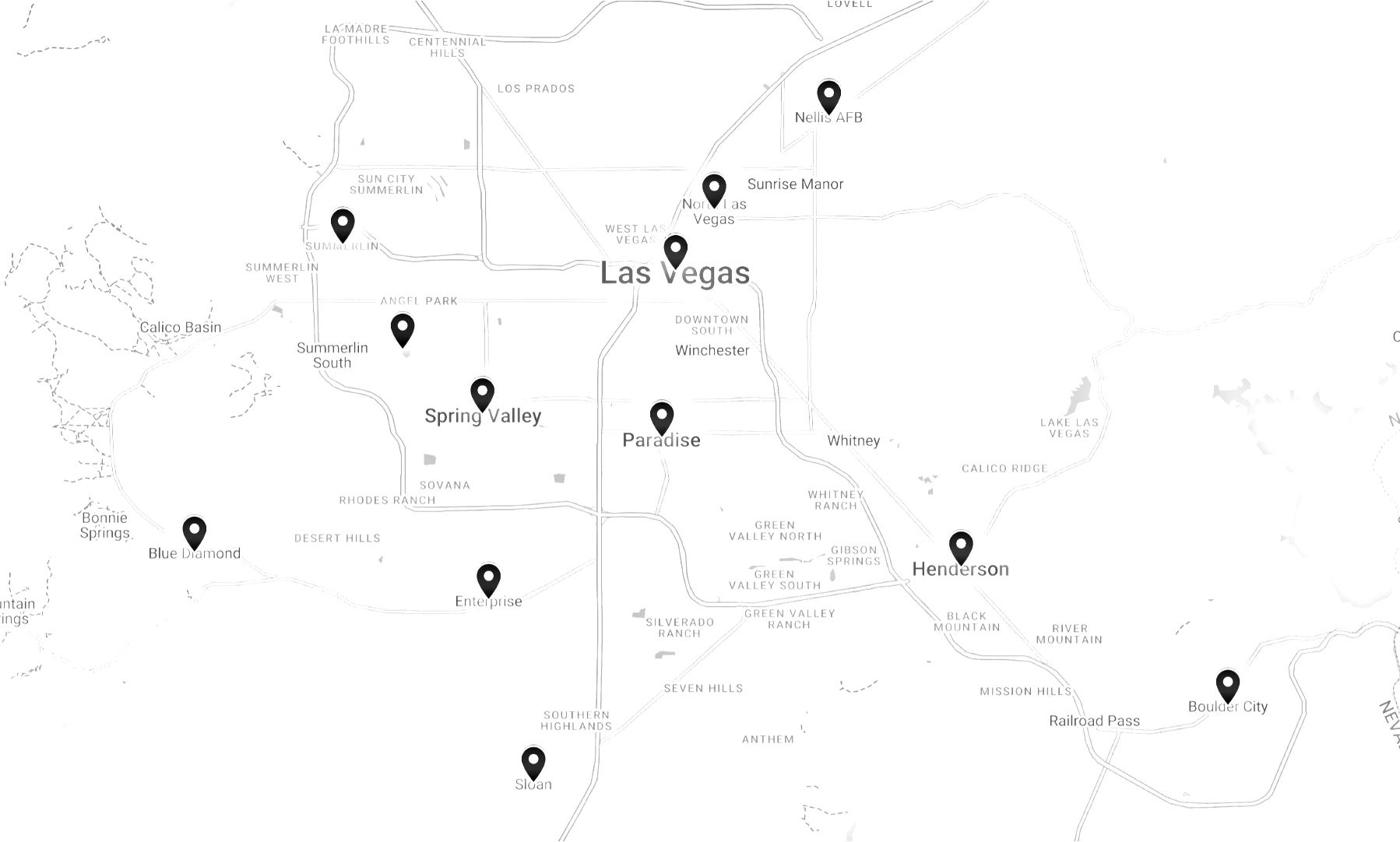
We serve the whole Las Vegas valley All 17 areas
Frozen AC Repair in Paradise, and across every area on this list. Eight to nine months of run time a year is hard on equipment anywhere in this valley.
West valley
North valley
East & south