
AC Compressor Repair Paradise NV
- 24/7 Emergency Service
- Financing Available
- A+ BBB Rated
- Licensed & Insured
Inside the AC Compressor Repair Process
The system pressurizes refrigerant to move heat out of the home and release it outdoors during the cooling cycle. Without the compressor, none of that happens. It is the most expensive part in your AC, and one of the failures most likely to place strain on surrounding components when problems go unresolved. The good news is that not every compressor problem means a new compressor. Sometimes the issue traces back to the capacitor, contactor, or refrigerant charge supporting the system rather than the compressor itself. Diagnosis sorts that out before anyone touches a wrench.
Real repairs on the compressor side cover a handful of fixes. Hard start kits for compressors that struggle to come on. Capacitor replacement when the start signal is weak. Wiring repair, contactor swaps, and refrigerant work for systems running out of charge. When the compressor itself has burned out internally or seized mechanically, replacement often becomes the more practical long-term option. The ENERGY STAR program from the U.S. Department of Energy walks through the repair-versus-replace math in detail, and we walk through the repair-versus-replacement considerations during the diagnostic process. For full unit swaps, see our separate Compressor Replacement page.

AC Repair
Broader residential AC system repair across the common failure points in Paradise homes. Our main Paradise AC repair coverage.
Capacitor and Contactor Repair
The most common cause of a compressor that will not start is a failed start capacitor. We carry common sizes on the truck.
Compressor Replacement
When repair is no longer the answer and the unit needs a full compressor swap. We bring you both numbers so you decide.
Frozen AC Repair
Ice on the coil overloads the compressor every cycle. We thaw the system and fix what caused it.
Condenser Fan Motor Repair
When the outdoor fan stops, the compressor overheats in minutes. We address fan motor failures before they create additional strain on the cooling system.
AC Leak Repair
Slow refrigerant leaks make the compressor work harder until it fails. Addressing refrigerant leaks early helps reduce long-term strain on the system.
Emergency AC Repair
A compressor failure during peak heat is an emergency. Around the clock dispatch when the call cannot wait.
Neighborhoods We Serve Across Paradise
We service AC compressor repairs in homes across Paradise, including Paradise Palms, the UNLV rental corridor, and the residential blocks east of the Strip. Many Paradise homes were built in the 1960s and 1970s, which means the AC systems we work on are often older than systems in newer parts of the valley. Aging compressors naturally experience more wear, especially after years of extreme summer run hours. Our technicians carry common compressor parts on the truck so most Paradise repairs finish on the first visit.
- Enterprise
- Whitney
- Winchester
- Elk Horn
- Tule Springs
- Green Valley
Not on the list? Contact us and we’ll confirm whether we can reach you.
The Pure Plumbing & Air Difference for Paradise Homeowners
Compressor work is the most expensive AC repair you can face, and the diagnosis matters as much as the fix. Pure Plumbing & Air has been working on AC compressors across Paradise and the surrounding valley since 2013. Recommendations are based on diagnostic testing, not assumptions. So, you know whether you’re paying for a repair that will last or a replacement that makes more sense.
The recommendation depends on the condition of the system, the repair involved, and the long-term reliability outlook. The recommendation comes from what the diagnostic tells us, not from what costs the most.
- Licensed HVAC technicians, Nevada contractor licenses #77906 and #88741, working on Paradise AC since 2013.
- Honest diagnostics. We test compressor amperage, refrigerant pressures, capacitor microfarad reading, and contactor condition before we tell you what is wrong.
- Repair or replace, plainly. Repair and replacement estimates are provided clearly so you can compare the long-term value of each option. No upsell pressure.
- 24/7 availability for compressor failures during peak heat. No-cool calls are prioritized during periods of extreme heat across the valley.
- Common parts on every truck. Hard start kits, run capacitors, contactors, refrigerant for the major types, and the meters to test them.
- Pure Plan Membership available. Members get priority scheduling and discounts on repair parts.
HVAC Services We Offer Includes:

AC Compressor Repair FAQs From Paradise Homeowners
AC compressor repair in Paradise is most affordable when the issue is caught early, before a struggling compressor takes the windings down with it. We diagnose first, run the repair-or-replace math honestly, and let you decide.
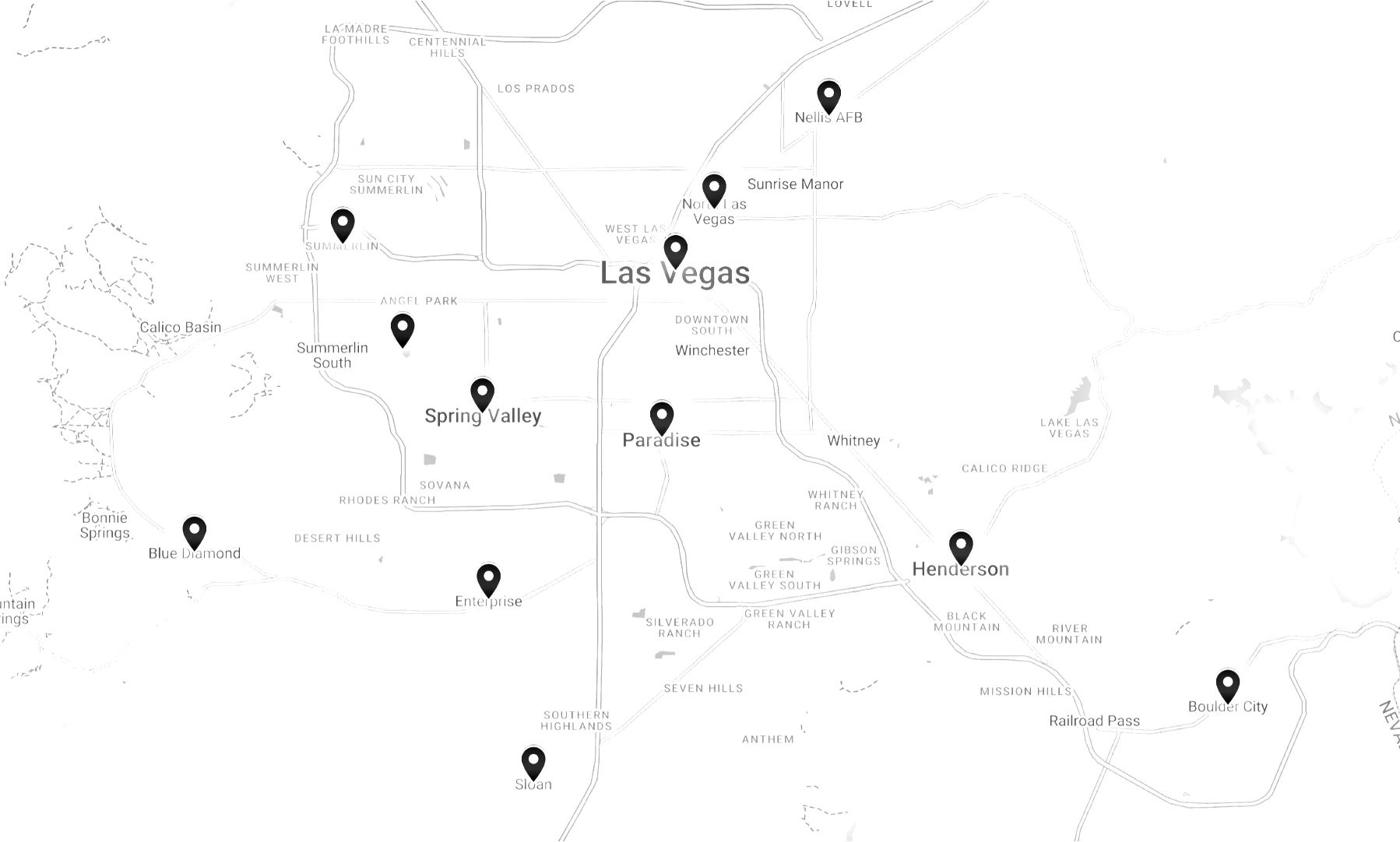
We serve the whole Las Vegas valley All 17 areas
AC Compressor Repair in Paradise, one stop on a valley-wide route. Desert heat wears a system the same way whether it sits on a Henderson roof or in a Skye Canyon attic.
West valley
North valley
East & south