
Indoor Air Quality Solutions Las Vegas NV
- 24/7 Emergency Service
- Financing Available
- A+ BBB Rated
- Licensed & Insured
What Indoor Air Quality Service Covers
Air quality isn’t something you can eyeball. A home can look clean and still have elevated particulate levels, VOCs from flooring or paint, or biological growth behind a wall that never dried right. Testing puts actual numbers on what’s in the air. Without it, you’re guessing. It is one part of a broader set of HVAC and home comfort services we provide across the Las Vegas Valley.
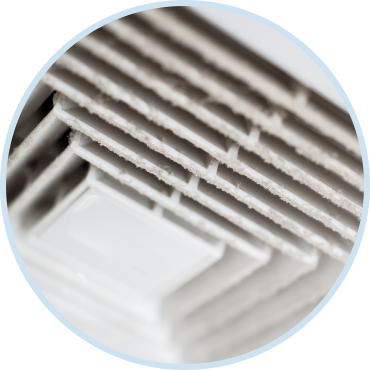
We look at the factors that show up most in Las Vegas homes. Particulate levels, humidity, ventilation, how the duct system is set up, and anything that might be a source of biological growth. Once we have results, we go through them with you and talk through what, if anything, makes sense to do about it.
Indoor Air Quality Services We Handle
Testing is where everything starts. The rest of these services fix what it finds, from the ducts and the HVAC system to filtration, purification, and humidity.
Testing is where everything starts. A lot of homeowners come to us with symptoms or concerns but no clear picture of what’s actually elevated in their home. We use calibrated instruments including particle counters, VOC sensors, and hygrometers to measure what is actually elevated in your home. Particulates, volatile organic compounds, humidity levels, and other factors are documented, then we walk through the results with you before any next step is discussed.
See detailsYour duct system moves air to every room in the house. Dust, debris, mold, and anything left behind by pests get pushed into the living space every time the system runs. Cleaning the ducts doesn’t replace air quality testing, but it takes care of one of the more direct sources of what ends up in your air.
See detailsGaps in duct insulation let attic air bleed into the airstream before it reaches your rooms. Las Vegas attics collect fine desert dust, insulation particles, and whatever else settles in an unconditioned space over the years. If the delivery system isn’t sealed properly, that material ends up circulating through the house.
See detailsA system that’s been maintained filters air better and is less likely to become a contamination source itself. Coils that haven’t been cleaned, drain pans sitting with standing water, filters that are past due. All of it becomes part of what recirculates through every room. Routine maintenance keeps the system working for your air quality instead of against it.
See detailsIf testing shows elevated particulate levels, the fix usually starts with what is catching those particles before they recirculate. A standard one-inch filter lets most of the fine stuff through. A whole house filtration system mounts in the return duct and captures desert dust, pet dander, pollen, and mold spores on every cycle. We match the filter type to your blower so you get cleaner air without choking the system.
See detailsFilters handle particles. Purification handles the stuff filters miss entirely: VOCs off-gassing from flooring and cabinets, cooking odors that linger in a sealed house, bacteria and mold spores too small for even a MERV 16 to catch. We install activated carbon systems, photocatalytic oxidation units, UV-C germicidal lights, and ionizers that tie directly into the ductwork and treat the air on every pass.
See detailsMoisture is part of the air quality picture. Too dry and your skin cracks, your sinuses suffer, and static electricity takes over the house. Too humid and you are feeding mold, dust mites, and bacteria. Las Vegas swings between both. Winters run extremely dry, and the summer monsoon season can push indoor humidity up quickly in a home that has been sealed all year. We install whole-home humidifiers and dehumidifiers that tie into the duct system and keep indoor moisture levels in the 30 to 50 percent range year r
See detailsWondering which of these services applies to your situation? Call us before scheduling anything. We can help you figure out where to start.
When to Think About Indoor Air Quality Testing
Air quality problems don’t usually announce themselves clearly. The symptoms get blamed on seasonal allergies, a cold that won’t quit, or just feeling run-down. By the time someone thinks to look at the air, it’s often been a problem for a while.
A few situations where testing is worth a look:
Allergy or respiratory symptoms that only happen indoors
You feel it at home, better when you leave. That pattern points toward something in the air, not something seasonal.
A smell that shows up when the system runs
Musty, chemical, or stale odors coming through the vents usually mean something is in the ductwork or on the coils.
Recent construction or renovation
Drywall dust, adhesives, and flooring materials all release particles and compounds that linger well after the work is done.
Moving into a home with unknown history
Previous owners, pets, water damage that was never dried out properly. You cannot know what has been sitting in the walls or the ducts.
Water damage or mold, whether or not it’s been addressed
Remediation handles the source. Testing confirms the air has actually cleared.
An HVAC system that hasn’t been serviced in years
Dirty coils, clogged drain pans, and overdue filters turn the system itself into a contamination source.
Young kids, elderly residents, or anyone with a respiratory condition in the home
Their systems are more sensitive to what’s circulating. The threshold for testing sooner is lower.
Wondering whether your situation warrants testing? Call us and describe what you’re seeing. Our technicians can help you think through it before anything gets scheduled. Our Las Vegas HVAC guide also explains how filters, ducts, and humidity shape the air in a desert home.

Why Choose Pure Plumbing & Air for Indoor Air Quality
Our indoor air quality solutions in Las Vegas NV start with a measurement, not a recommendation. A lot of companies in this space lead with products. We lead with a test. Pure Plumbing & Air has been in Las Vegas since 2013, and our approach hasn’t changed. Find out what’s actually there first, then talk about what to do with that information.
Las Vegas has its own set of conditions. Homes stay sealed most of the year, HVAC runs constantly, and the dust out here is fine enough to pass through filters that would stop it anywhere else. Our technicians work in this market every day. They know what normal looks like for a Las Vegas home and what warrants a closer look.
On a Pure call, that means:
Testing before recommendationsWe measure first. You get real data, not a sales pitch.
Plain explanationsWe go through the results with you in plain terms and tell you what, if anything, the numbers suggest you do.
No unnecessary upsellsIf your air quality is in a normal range, we’ll say so and leave it at that.
Connected services when relevantIf results point to a duct issue or a maintenance gap, our team can address it directly.
Available 24/7Call after hours and we can talk through what you’re seeing.
Nevada contractor licenses #77906 and #88741
HVAC Services
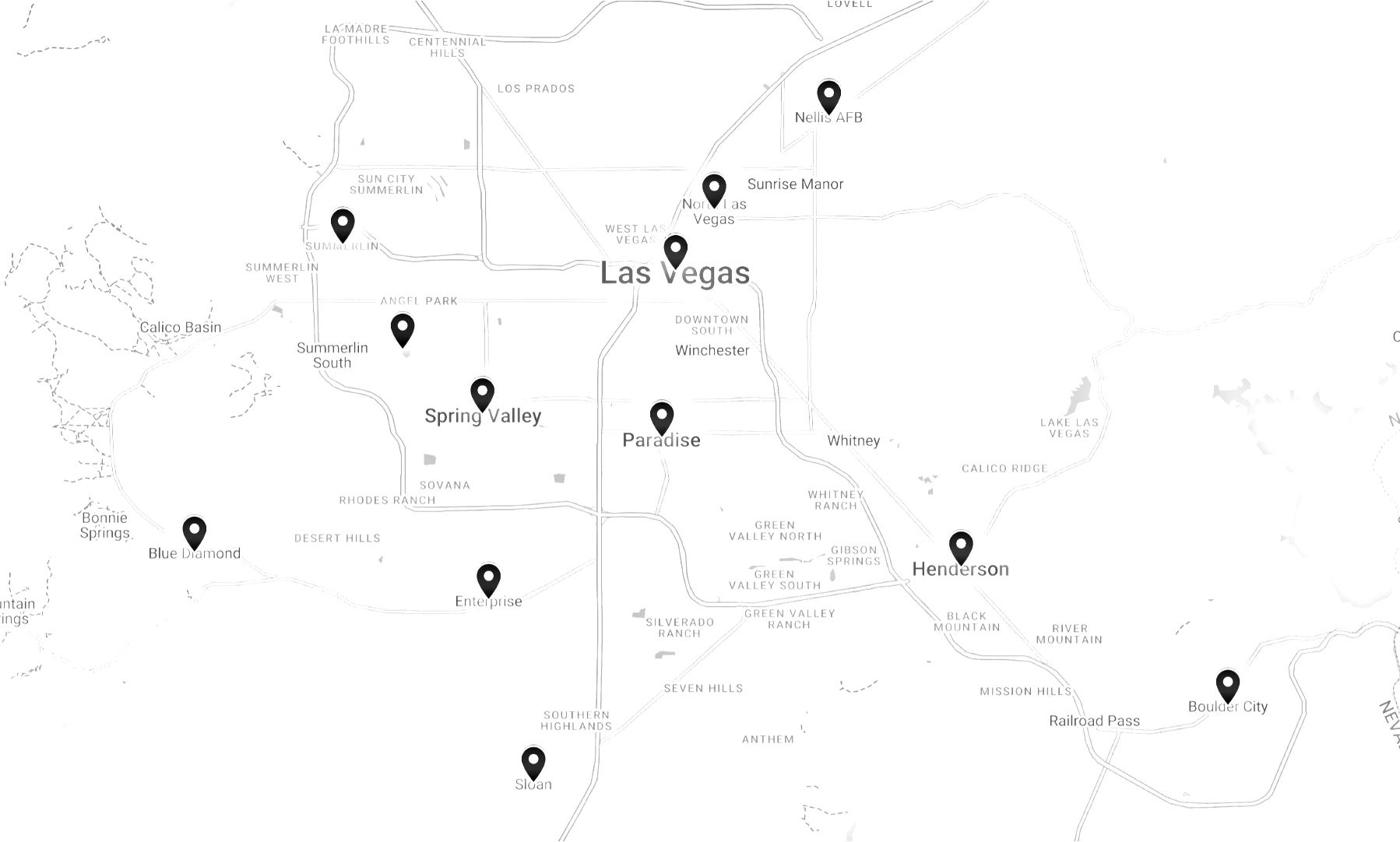
We serve the whole Las Vegas valley All 17 areas
Indoor Air Quality Solutions in Las Vegas, and across every area on this list. Same trucks, same plumbers, and the hard water every neighborhood here shares.
West valley
North valley
East & south
Indoor Air Quality Solutions FAQs for Las Vegas NV
Las Vegas homes deal with a specific mix. Fine desert particulates get pulled in through gaps, intakes, and foot traffic. Drought-tolerant landscaping produces pollen that stays airborne longer in dry air. Biological growth shows up anywhere moisture didn’t dry right, which matters more in older homes with a history of plumbing issues. VOCs from flooring, paint, and cleaning products get trapped when windows stay shut for months. The EPA classifies indoor air pollutants as biological, combustion-related, and chemical. Most Las Vegas homes have some exposure to all three. Humidity is one factor. Read why a Las Vegas house can feel so humid.
Usually you notice something and don’t immediately connect it to the air. Symptoms that ease up when you leave the house. A smell that only appears when the system kicks on. Headaches or fatigue that come and go without an obvious cause. None of these are a definitive answer on their own. The only way to know what’s actually elevated and why is to test.
Directly, yes. Your HVAC moves air to every room. Dirty coils, standing water in drain pans, filters that are overdue, contaminated ductwork. Every one of those issues contributes to what your family ends up breathing. We see unmaintained systems come up regularly as a contributing factor in air quality complaints. Getting the system serviced often makes a measurable difference before anything else needs to happen.
It does. Desert soil here is fine-grained and gets into homes through gaps, HVAC intakes, and foot traffic. Once inside it stays airborne until it settles or a filter captures it. Standard filters below MERV 11 catch the larger particles but let the fine desert particulates through. Homes with anyone sensitive to airborne particulates are better served by MERV 11 or MERV 13 filters, which are rated to capture the smaller particle sizes.
Testing tells you what’s in the air and at what concentration. Improvement is whatever you do once you have that information. The right steps depend on what testing finds. It might be a duct cleaning, a filter upgrade, better ventilation, or a maintenance visit. We don’t point people toward improvement services before we know what the test shows.
There’s no set interval that applies to everyone. Moving into a home is a good reason. So is any water damage, any significant renovation, or any time someone in the household develops symptoms without another clear explanation. Homes with young children or anyone managing a respiratory condition have more reason to check regularly. If the HVAC hasn’t been serviced in a few years, factor that in too.
Routine maintenance visits under the Pure Plan Membership cover the mechanical side of the system: filters, coils, and duct conditions. Dedicated air quality testing is a separate service. If you’re a member and want both done together, priority scheduling makes it easy to coordinate them in the same visit.
Visit length varies with home size, duct layout, access, and how much dust or debris has accumulated. A technician can assess the system and give a more useful estimate before work begins. See what affects duct-cleaning time.
A whole-home purifier can reduce airborne particles such as dust and allergens, but results depend on the source of the particles, the system, and its maintenance. An indoor air quality assessment can help determine whether filtration is the right step. See our overview of whole-home air purifiers.