HVAC System Repair in Las Vegas, NV
- 24/7 Emergency Service
- Financing Available
- A+ BBB Rated
- Licensed & Insured
HVAC System Repair: What We Fix and What’s Included
HVAC system repair means identifying exactly what failed and fixing it correctly the first time. Las Vegas systems run harder and longer than in almost any other market. The cooling season alone runs roughly April through October, seven months of near-continuous operation.
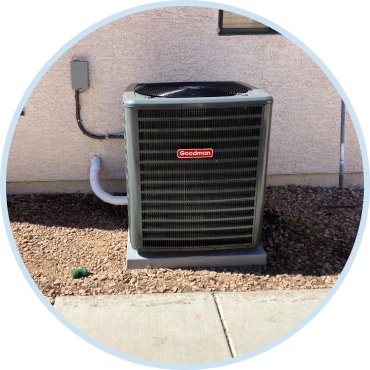
Desert dust loads accelerate coil and filter buildup faster than manufacturer service intervals account for. Attic and rooftop installations take on heat soak conditions that stress electrical components, refrigerant seals, and capacitors year-round. We check for all of it on every call.
We repair all major HVAC system types, including central air conditioning, heat pumps, gas furnaces, packaged rooftop units, and ductless mini-splits.
Common HVAC System Repairs in Las Vegas
Capacitor failures are the most frequent call we handle, particularly mid to late summer after months of continuous cooling operation. A failing capacitor causes the compressor or fan motor to struggle starting or stop working entirely. Catching it early prevents compressor damage. Other common repairs include:
Refrigerant leaks
Reduced cooling capacity, longer run times, and eventual compressor damage if left unaddressed. We locate the leak, repair it, and recharge to spec.
Contactor failure
A worn or pitted contactor prevents the outdoor unit from starting. Common after long cooling seasons.
Condenser fan motor failure
Outdoor fan stops spinning, causing the system to overheat and trip on high pressure. More frequent on rooftop units with direct sun exposure.
Igniter and flame sensor failure (furnaces)
Igniters age whether the system runs or not, and after a long idle Las Vegas summer they are most likely to fail on the first call for heat in fall.
Heat exchanger cracks (furnaces)
Develop gradually over years of thermal cycling. Not always visible without a proper inspection. CO risk from a breached heat exchanger warrants immediate attention.
Reversing valve faults (heat pumps)
Prevents the system from switching between heating and cooling modes, or causes the system to operate in the wrong mode.
Blower motor issues
Reduced airflow, unusual noise, or no airflow from the indoor unit. Dust accumulation on blower wheels is a contributing factor in Las Vegas.
Coil restrictions
Dirty evaporator or condenser coils from dust buildup reduce heat transfer and force the system to work harder. Common in homes where maintenance has been deferred.
Condensate drain clogs
Mineral buildup and debris block the drain line, trip the float switch, and shut the system down. Las Vegas municipal water is among the hardest in the US, which accelerates scale accumulation in drain lines and pan areas beyond what most manufacturer maintenance intervals anticipate.
Control board and thermostat faults
Incorrect signals, failed staging, or no call for heating or cooling.
Signs Your HVAC System Needs Repair
HVAC systems rarely fail without warning. Catching a problem early usually means a simpler, less expensive fix. Call us if you notice:
The system is running but not cooling or heating the home to setpoint
Airflow from vents feels weak or uneven across rooms
The outdoor unit is running but the indoor unit is not keeping up
Ice is forming on the indoor coil or refrigerant lines
The system is short-cycling, turning on and off frequently without holding temperature
Unusual noises from the indoor or outdoor unit including grinding, rattling, banging, or squealing
Energy bills jumped without a change in how you use the system
Water is pooling around the indoor air handler
The system will not turn on at all
Certain rooms stay significantly warmer or cooler than others regardless of runtime
The furnace ignites but shuts off after a few minutes
You smell burning or detect unusual odors when the system runs
Before We Arrive, Here Is What You Can Check Safely
In Las Vegas summer heat, a system that is struggling but not completely down can become a complete failure quickly. In winter, a furnace that is short-cycling may have a heat exchanger issue that warrants immediate attention for safety reasons.
- Check your breaker panel for a tripped breaker on the air handler or outdoor unit
- Confirm the thermostat has power, is set to the correct mode, and the setpoint is appropriate
- Check the filter if you can access it safely. A clogged filter is one of the more common causes of restricted airflow and system strain. Las Vegas dust loads mean filters clog faster than standard replacement schedules assume.
- Check that the condensate drain pan is not overflowing, which would trip the float switch and shut the system down
Repair vs. Replace (How We Make the Call)
We get this question on most calls where a system is older or has had recent problems. Our answer is always based on actual numbers.
A capacitor, contactor, refrigerant recharge, igniter replacement, or drain line repair on an otherwise healthy system is a straightforward fix with years of useful life left in the equipment.
| Factor | Repair | Replace |
|---|---|---|
| System age | Under 10 years old | 12 to 15 years old or older |
| Repair history | A single issue, not a pattern of recurring failures | Multiple major repairs in recent seasons |
| Condition | Maintained and otherwise in good condition | Consistently fails to hold comfort during peak Las Vegas temperatures, even after repairs |
| Repair cost | Well under half the price of a new system | The compressor has failed and repair cost approaches the price of a new unit |
| Furnace | – | A cracked heat exchanger on an older furnace where replacement cost approaches a new unit |
| Refrigerant type | – | The system uses R-22 refrigerant. New production and import ended in 2020, and Pure Plumbing & Air does not recharge R-22 systems, so refrigerant loss on this equipment means replacement. |
| Refrigerant leaks | A one-time recharge on an otherwise healthy system | Refrigerant loss keeps recurring, pointing to a chronic leak that repairs have not resolved |
We give you the numbers for both options on every call and let you decide. If repair makes sense, we say so. If it does not, we explain exactly why.
What We Check Before We Quote Anything
We do not guess. Readings determine the recommendation. Before we suggest a repair or anything else, our technicians run a full system evaluation:
Capacitor health, contactor condition, compressor and fan motor amp draw, control board function, thermostat signal verification, and start component testing. We check for loose connections and heat discoloration at terminals, which are more common after long Las Vegas summer run cycles.
Leak detection, superheat and subcool readings, coil condition, and line set inspection. On any sealed-system work, we pull a deep vacuum and verify with a micron gauge before charging. We record charge readings, airflow, and temperature split after every repair.
Burner condition, heat exchanger integrity, combustion analysis, CO check, gas pressure at manifold, ignition system function, and flue venting confirmation. A cracked heat exchanger is a safety issue that warrants immediate attention regardless of system age.
Blower performance, filter condition, temperature split across supply and return, and duct leakage indicators. If static pressure is high or airflow is uneven, we explain whether it is a filter or coil issue or a duct restriction and leak before recommending anything. TheU.S. Department of Energy notes that restricted airflow is one of the most common causes of HVAC inefficiency and performance problems, and Las Vegas dust loads mean it is a factor on a higher percentage of calls here than in most markets.
Confirmed setpoints, staging, mode switching, and system response
Drain line flow, float switch operation, and pan condition checked
Performance readings confirmed at target before we close the job
Diagnostic first, then firm pricing. No work starts until you approve the quote.

Why Choose Pure Plumbing & Air for HVAC System Repair in Las Vegas
Diagnosis before recommendationsFull system evaluation and firm pricing before any work starts. No guessing, no surprise charges after the fact.
Responsive serviceWe answer the phone 24/7 and dispatch quickly. Our technicians arrive stocked and ready to work.
Stocked trucksCommon HVAC parts ride with us. Fewer return trips, faster fixes.
All system typesCentral AC, heat pumps, gas furnaces, packaged rooftop units, and ductless mini-splits. Our technicians are trained across all major configurations.
Honest repair vs. replace callsIf fixing it makes sense, we fix it. If it does not, we explain why with actual numbers and walk you through your options.
All major brandsLennox, Trane, Carrier, Goodman, Rheem, American Standard, Daikin, and more. Our technicians are trained on both older equipment and current models.
Licensed and insuredNevada contractor licenses #77906 and #88741. Every technician is background checked.
No upsellingWe fix what is broken. That is it.
Pure Plan membersGet priority scheduling, no emergency fees, and discounts on parts and repairs. Ask us about membership when you call.
Family-owned since 2013A+ BBB rated, licensed, bonded, and insured in Nevada.
Be Sure, Call Pure! (702) 534-1910 .
Plumbing Services we Offer Include
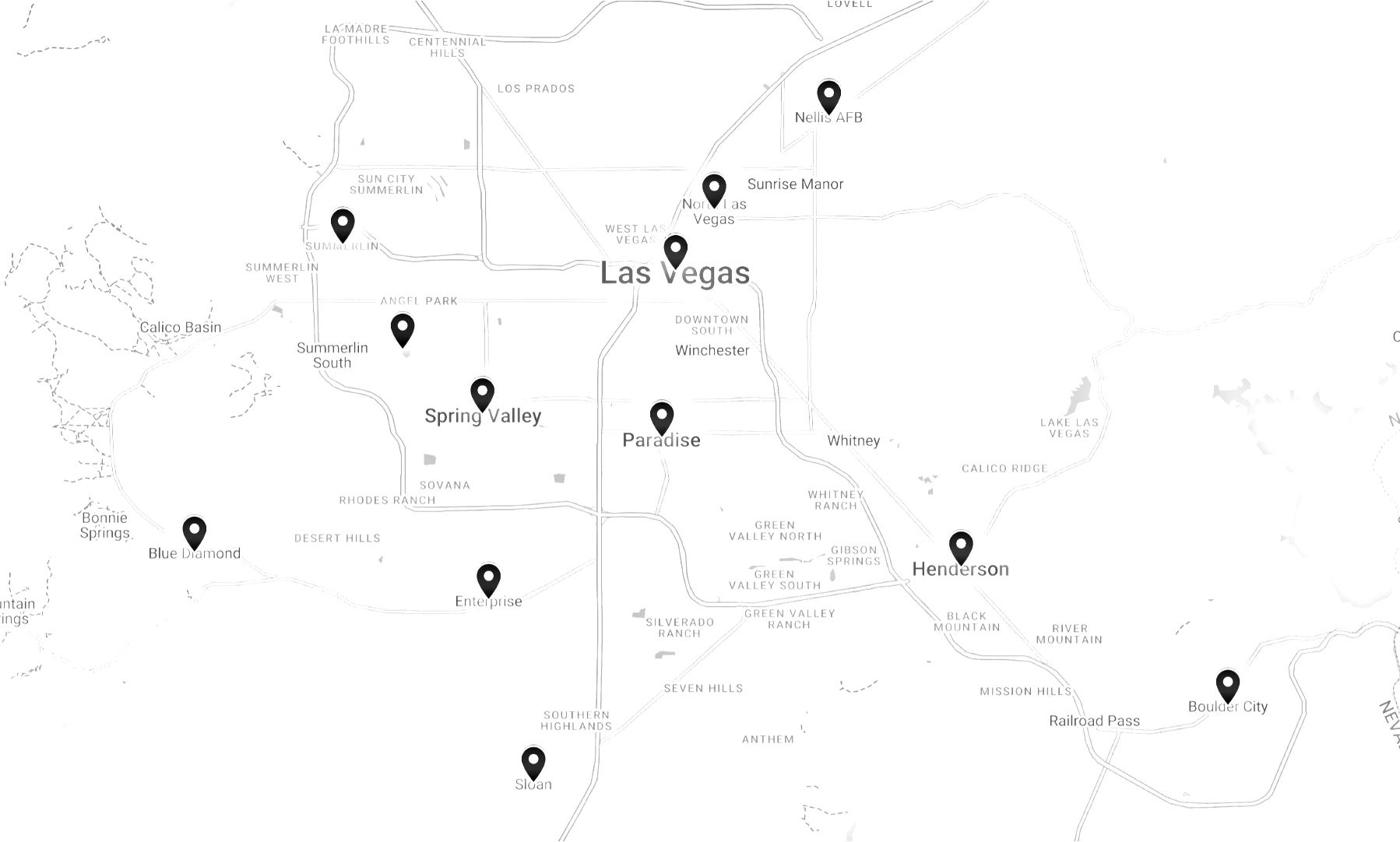
We serve the whole Las Vegas valley All 17 areas
HVAC System Repair in Las Vegas, one stop on a valley-wide route. Eight to nine months of run time a year is hard on equipment anywhere in this valley.
West valley
North valley
East & south
HVAC System Repair FAQs for Las Vegas, NV
Cost depends on the system type and what needs fixing. Minor repairs like a capacitor replacement or refrigerant recharge sit at the lower end of the scale. Larger repairs involving a failed motor, control board, or heat exchanger run higher. Compressor replacement on an older system often approaches the cost of a new unit, which is when we have the replacement conversation. We give you a firm price after the diagnostic so you know exactly what to expect before we start.
Yes. We provide 24/7 emergency repairs for situations that cannot wait, including nights, weekends, and holidays. Call us any time and we will dispatch a technician.
The most common causes depend on the system type. For cooling, a failing capacitor, refrigerant leak, or dirty condenser coil are the most frequent culprits. For heating, an igniter failure, gas valve issue, or tripped limit switch are common causes. Las Vegas dust loads mean coil and filter restriction contribute to a higher percentage of calls here than in most markets. We confirm the cause through diagnostic readings before recommending anything.
Short-cycling typically points to a refrigerant charge issue, restricted airflow from a dirty filter or coil, an oversized system, or a safety limit tripping because of a heat exchanger issue on a furnace. On gas furnaces, a system that ignites and then shuts off after a few minutes is often a heat exchanger or limit switch concern and should be diagnosed right away.
If the system is under 10 years old and the repair is a single issue costing well under half the price of a new unit, repair usually makes sense. If it is past 12 to 15 years, has needed multiple major repairs recently, or consistently cannot hold comfort during peak Las Vegas heat, replacement tends to make more financial sense. We go through both options with actual numbers on every call.
We repair all major brands including Lennox, Trane, Carrier, Goodman, Rheem, American Standard, Daikin, and more. Our technicians are trained on both older equipment and current models across all major system types, including central AC, heat pumps, gas furnaces, packaged rooftop units, and ductless mini-splits.
Yes. A severely clogged filter restricts airflow enough to cause the evaporator coil to ice over on a cooling system or a limit switch to trip on a furnace, both of which can shut the system down entirely. Las Vegas dust loads mean filters clog faster than standard replacement schedules assume. If your system has stopped working, checking the filter is always the first step before calling for service.
Check your breaker panel for a tripped breaker, confirm the thermostat is set correctly and has power, and check the filter if you can access it safely. In summer heat or winter cold, an overnight HVAC failure can become a safety issue quickly, particularly for elderly residents, children, and pets. We provide 24/7 emergency HVAC repair across Las Vegas and the surrounding area.