
Condenser Fan Motor Repair in Mountain's Edge, NV
- 24/7 Emergency Service
- Financing Available
- A+ BBB Rated
- Licensed & Insured
Signs Your Mountain’s Edge AC Has a Failing Condenser Fan Motor
The condenser fan sits on top of the outdoor unit and pulls heat off the coil, so its failure is often visible the moment you look at the unit. Acting quickly matters here, because the compressor depends on that airflow to survive.
- The outdoor unit hums but the top fan blade is not turning
- The fan spins slowly, wobbles, or turns only after a push
- A grinding or screeching noise comes from the top of the condenser
- The unit runs, then shuts off on high heat after a short time
- The condenser cabinet is very hot and the home is not cooling
- The fan runs intermittently, stopping and starting on its own
Summer heat and dust in Mountain’s Edge are hard on a top-mounted motor. The fan assembly takes direct desert sun and radiant heat off the cabinet all day, while dust from open desert and construction loads condenser coils. That heat and dust strain outdoor equipment, and many original systems from the community’s mid-2000s build-out are now at or past typical service life, making fan inspection especially worthwhile.

What Stops an Outdoor Fan and Why It Matters
Fan motor failures fall into a handful of causes, and telling them apart matters because one of them, a bad capacitor, is a cheap fix while the others are motor work. The breakdown below explains what the technician checks and why a dead fan endangers the compressor. Speed is the theme, since the compressor is at risk while the fan is down.
-
Capacitor failure versus motor failure
A dead run capacitor is the single most common reason a fan will not start, and it is far cheaper than a motor. The classic test is whether the blade keeps spinning after a nudge, which points to the capacitor. Testing this first prevents a needless motor replacement.
-
Seized bearings and a locked shaft
Bearings packed with dust and cooked by heat eventually seize, locking the shaft so the motor cannot turn. A seized motor is replaced, since the bearings are not serviceable on these assemblies. Grinding noise before a full stop is the usual warning.
-
Burned windings and thermal failure
A motor that runs hot for long enough burns its windings and fails outright, often after a period of slow or intermittent spinning. Direct desert sun on the assembly accelerates this. A winding failure calls for a spec-matched replacement motor.
-
Fan blade damage and imbalance
A cracked or bent blade throws the assembly out of balance, which stresses the motor shaft and bearings and creates noise. The blade can often be replaced separately from the motor. Balancing the assembly protects the new or existing motor from early wear.
-
Matching the replacement motor
A replacement fan motor has to match horsepower, speed, rotation direction, and mounting, and the capacitor has to match the new motor. A mismatched motor runs hot and fails early or moves too little air to cool the compressor. Matching the specs is what makes the repair hold through the season.

Related Services Worth Considering
A fan motor failure sits close to the electrical parts and the compressor it protects. These related repairs stay near the same outdoor-unit call.
-
Capacitor and contactor repair
The same capacitor that runs the compressor often runs the fan, so a fan that will not start is frequently an electrical fix rather than a motor one. That electrical check comes first.
See Details
-
AC compressor repair
A fan that has been down lets the compressor overheat, so a compressor check often follows a fan repair on a unit that ran hot. Catching compressor strain early protects the costliest part.
See Details
-
Emergency AC repair
A stopped fan on a triple-digit day threatens the compressor within hours. After-hours dispatch covers this as the urgent repair it is.
-
Air conditioning contractor services
Fan motor work is one part of the full air conditioning service the company runs across the valley, from outdoor-unit repairs to complete replacements.
The Calls That Come In on a Stopped Fan
Fan motor calls tend to arrive urgent, because the symptom is visible and the risk to the compressor is real. Describing what the fan is doing helps the technician arrive with the right part.
- The outdoor unit is humming loudly but the top fan is completely still
- The fan is turning slowly or wobbling and the house has stopped cooling
- A harsh grinding or screech from the top of the unit that started recently
Delay here is uniquely risky. The condenser fan exists to shed the heat the compressor produces, so when the fan is down, the compressor overheats fast, and in the summer heat of Mountain’s Edge that can mean compressor damage within hours of running the unit. The single best move on a stopped fan is to shut the system off and stop running it until it is repaired, which protects the far more expensive compressor.
From Diagnosis to a Turning Fan, Step by Step
- The technician confirms the fan is the problem and checks the condition of the compressor, since a unit that ran with a dead fan may already be hot. This first look sets the urgency.
- Power is cut at the disconnect and the run capacitor is discharged and tested, because a dead capacitor is the most common and cheapest cause of a stopped fan. Ruling it in or out first avoids an unnecessary motor replacement.
- If the capacitor is good, the motor is checked for a seized shaft, burned windings, and bearing wear, and the blade is inspected for cracks and balance. These readings separate a capacitor fix from a motor replacement.
- A failed motor is replaced with a spec-matched unit, the capacitor is matched to the new motor, and a damaged blade is replaced and balanced. Rotation direction and airflow are confirmed so the new motor actually cools the compressor.
- Power is restored and the unit is run while the technician confirms the fan turns at full speed, checks amp draw, and verifies the compressor is shedding heat and cooling normally. You get a clear account of the fault and the repair.
Serving Mountain’s Edge and the Southwest Valley
The company dispatches from the East Sunset Road shop and reaches the community on a routine dispatch, with same-day service the usual outcome for an urgent stopped fan in season. Coverage extends to Mountain’s Edge, Enterprise, Spring Valley, Silverado Ranch, Southern Highlands, Rhodes Ranch, Summerlin, Las Vegas, Henderson, and Paradise. Homeowners just outside the list are welcome to call and confirm.

Why Mountain’s Edge Homeowners Trust the Fan Repair
Pure Plumbing & Air tests the cheap cause before the expensive one, so you pay for the actual fault. The company has serviced valley condensers since 2013 and holds Nevada licenses #77906 and #88741, verifiable through the Nevada State Contractors Board, which holds the work to state standard.
Service runs 24/7, which matters most with a stopped fan, since the compressor is at risk every hour the unit runs without it. Pure Plan membership adds seasonal inspection that catches bearing wear and weak fan capacitors before a summer failure, along with priority scheduling. The company also carries strong customer reviews across the valley for fast, honest outdoor-unit repairs, and its licensed HVAC contractor team covers the full range from a fan motor to a system replacement.
Condenser Fan Motor Repair FAQs for Mountain’s Edge, NV
Keep Your Compressor Cool
A still fan on a humming unit is a repair that protects everything downstream of it. Pure Plumbing & Air gets Mountain’s Edge outdoor fans turning again with spec-matched parts, testing the cheap cause first and confirming the compressor is safe before leaving. Call (725) 210-6034 and shut the unit off until we arrive.
HVAC Services We Offer Includes:
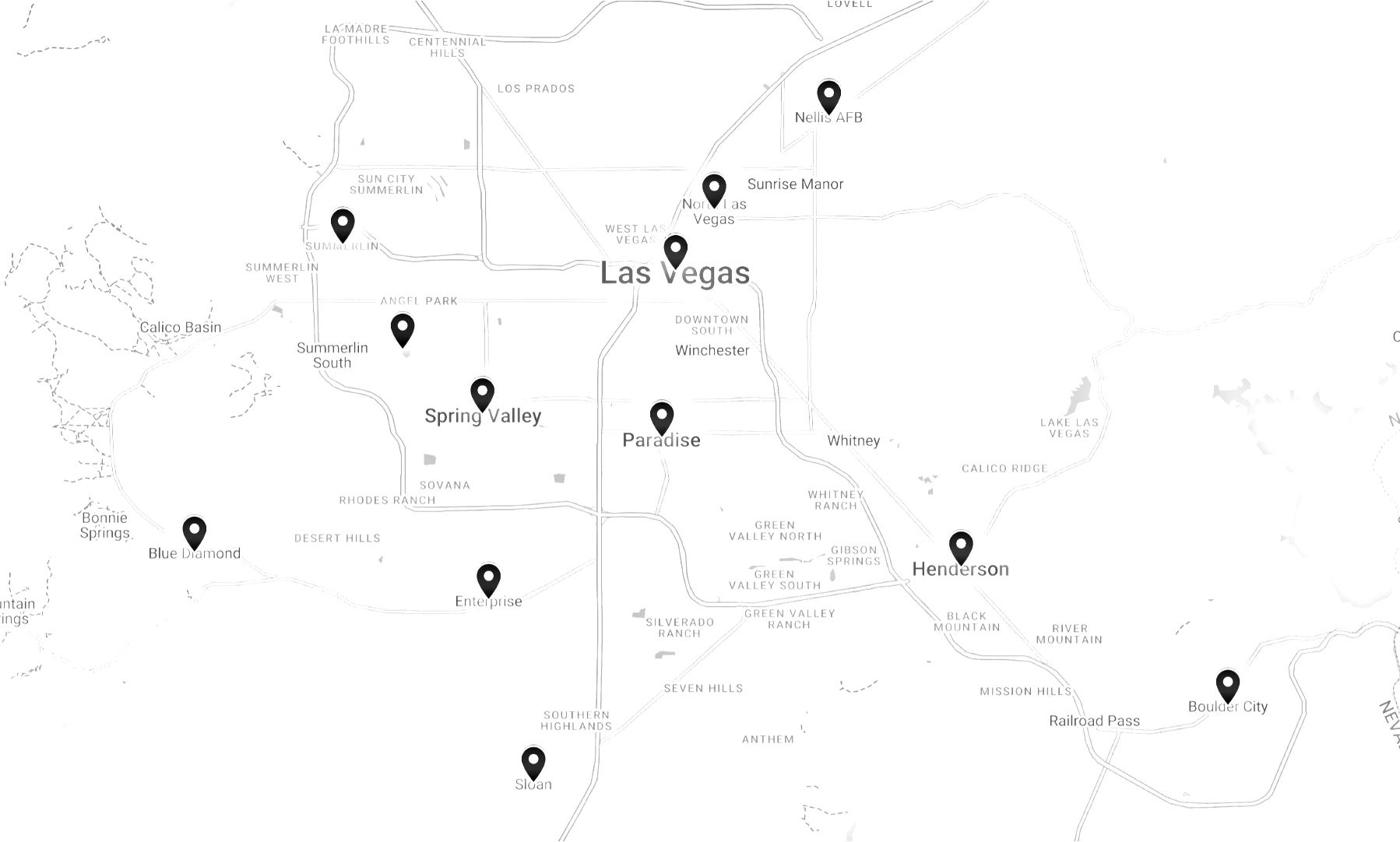
We serve the whole Las Vegas valley All 17 areas
Condenser Fan Motor Repair in Mountain's Edge, valley-wide. Desert heat wears a system the same way whether it sits on a Henderson roof or in a Skye Canyon attic.
West valley
North valley
East & south