
AC Compressor Repair in Mountain's Edge, NV
- 24/7 Emergency Service
- Financing Available
- A+ BBB Rated
- Licensed & Insured
Signs Your Mountain's Edge AC Compressor Is Struggling
A compressor rarely dies without warning, and the early signals are easy to mistake for a general cooling problem. Catching them before a full burnout is the difference between an electrical repair and a four-figure replacement.
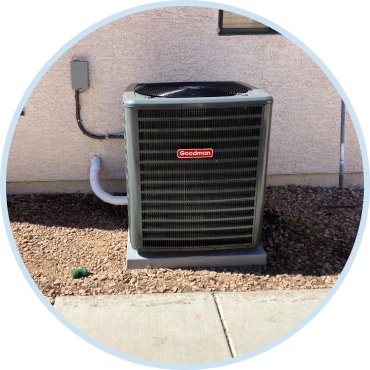
Watch for these behaviors:
- The system runs but the air from the vents is only slightly cool or plain warm
- The outdoor unit trips the breaker moments after it starts
- A loud clatter, growl, or knocking comes from the condenser during operation
- The unit starts hard, hesitates, then labors before the fan catches up
- Cooling cycles grow shorter and repeat more often through the afternoon
- The condenser cabinet runs noticeably hotter to the touch than usual
Mountain’s Edge faces summer highs well over 100 degrees for months, and a compressor here spends the whole cooling season under near-continuous load. That runtime, combined with original mid-2000s equipment now at or past typical service life, puts added strain on aging compressors in the community. Heat is the single largest factor in valley compressor failures.
What Actually Fails Inside a Laboring Compressor
Most homeowners hear “compressor problem” and assume replacement, but a real diagnosis often finds a fault that can be corrected for a fraction of that cost. The breakdown below covers the failures that are repairable and the signs that point past repair. Each one calls for a different fix, which is why testing comes before any quote.
Many apparent compressor failures are actually a dead capacitor, a burned contactor, or a wiring fault starving the motor of clean power. These are inexpensive corrections that restore normal starting, and ruling them out is always the first step. A compressor condemned without this check is often a compressor replaced for no reason.
A compressor that hesitates on startup pulls locked-rotor amperage, a heavy surge that heats the windings every time it struggles. A hard start kit adds a start capacitor and relay that give the motor a short boost to break free cleanly. On older equipment this single add-on often ends the hard-start cycle and extends compressor life through the season.
Compressors carry an internal overload that trips them offline when they run too hot, producing a unit that cools for a while then quits and restarts. Low refrigerant, a dirty condenser coil, or a failing fan motor all drive that overheating. The compressor itself may be sound once the underlying heat source is corrected.
Rapid on-off cycling often traces to refrigerant charge or pressure-switch problems rather than the compressor. Running a compressor through constant short cycles wears it quickly, so the pressure side gets checked before anything is condemned. Correcting the charge frequently settles the cycle and spares the motor.
Some conditions do point to replacement: a grounded winding, internal mechanical seizure, or a burnout that has contaminated the refrigerant circuit. A meter reading to ground and a check for acid in the oil confirm it. When testing shows genuine internal failure, the honest path is replacement, and the conversation shifts there.
The Situations That Bring Homeowners to This Repair
Compressor calls from the community tend to arrive in a few recognizable forms, and naming yours on the phone helps the technician arrive prepared.
The scenarios we field most:
The AC runs constantly but the house never reaches the set temperature, and the vents blow near-room-temperature air
The outdoor unit kicks the breaker every time it tries to start, so the home has no cooling at all
The system cools for twenty minutes, shuts off on overload, sits, then restarts on its own
Waiting turns a small fault into a large one. A compressor forced to fight a bad capacitor or a dirty coil overheats a little more with every cycle, and repeated overheating is exactly what pushes a repairable unit into a true burnout. Because a burnout can contaminate the whole refrigerant circuit and force a far larger job, an early diagnosis is the cheaper decision almost every time.
How a Compressor Diagnosis Actually Works
The technician confirms the reported symptom, then reads the system live: supply and return temperatures, starting behavior, and amp draw against the nameplate. This snapshot separates a starting problem from an internal one before anything is opened.
Power is cut at the disconnect and the electrical parts are tested first. The capacitor is metered, the contactor is inspected, and the wiring is checked for heat damage, since a fault here mimics compressor failure and is far cheaper to fix.
Refrigerant pressures are measured on both sides to rule out charge and airflow problems that cause overheating and short cycling. A compressor that trips on heat is often the victim of a fault somewhere else in the circuit.
If the electrical and pressure sides check out, the compressor windings are read for resistance and to ground, and the oil is checked for signs of burnout. These readings confirm whether the motor itself has failed.
The technician then lays out the finding in plain terms: the specific fault, whether it is a repair or a replacement, and clear pricing for each path. No compressor is condemned without the readings to back it.

Why Homeowners Trust the Diagnosis, Not Just the Fix
Pure Plumbing & Air tests the electrical and pressure sides first, so a homeowner never pays for a compressor when a capacitor was the real fault. The company has worked valley air conditioners since 2013 and holds Nevada licenses #77906 and #88741, verifiable through the Nevada State Contractors Board, which holds the work to state standard.
Pure Plan membership adds seasonal tune-ups that catch the overheating drivers, dirty coils and weak parts, before they cook a compressor, along with priority scheduling. The company also carries strong customer reviews across the valley for honest repair-or-replace guidance, and its licensed HVAC contractor team handles the full path from diagnosis to replacement.
HVAC Services We Offer Includes

We serve the whole Las Vegas valley All 17 areas
AC Compressor Repair in Mountain's Edge across all 17 areas below. We carry the parts these systems actually fail on, so most repairs finish in one visit.
West valley
North valley
East & south
AC Compressor Repair FAQs for Mountain's Edge, NV
Many compressor complaints turn out to be electrical faults, refrigerant problems, or overheating from a dirty coil, all of which are repairable. A true internal failure, like a grounded winding or a seizure, does call for replacement. The only way to know which one you have is a full diagnosis with meter and pressure readings. Replacement is recommended only when the readings confirm the motor itself has failed.
A compressor that cannot pump refrigerant properly leaves the system moving air without removing heat, so the vents blow warm. The cause can be a failing compressor, a low charge from a refrigerant leak, or an electrical fault preventing a full start. Running the system in this state adds strain without adding cooling. A diagnosis identifies which of those is behind it.
Cost depends entirely on the fault, since an electrical correction and an internal-failure replacement sit at very different price points. That is exactly why the diagnosis comes first and the quote comes after. You get a clear price for the repair path and, where relevant, for replacement, before any work starts. There are no charges added after the fact.
A hard start kit gives a hesitating compressor a strong, brief boost to break free cleanly at startup, then drops out of the circuit. It reduces the heavy locked-rotor surge that wears the windings and trips breakers. On older units it is an inexpensive way to buy reliable seasons out of an aging compressor. The technician confirms it is the right fit before installing.
Compressors carry an internal overload that trips them offline when they run too hot, then resets once they cool. The heat usually comes from low refrigerant, a dirty condenser coil, or a weak fan motor, not the compressor itself. Correcting that underlying source often returns the compressor to normal. Left alone, repeated overheating shortens its life.
It can, and quickly. A struggling compressor draws heavy current and builds heat with every cycle, and a burnout can contaminate the refrigerant circuit and turn a repair into a much larger job. During a valley heat wave that damage can compound in days. Shutting the system off and scheduling a diagnosis is the safer path.
Most diagnoses are completed within a single visit, since the electrical, pressure, and winding checks all happen at the condenser. Straightforward electrical repairs are frequently finished the same day. A confirmed internal failure moves into the replacement conversation with clear next steps. You leave the visit knowing exactly what failed and what each path costs.
Get a Straight Answer on Your Compressor
Warm air, a tripping breaker, or a unit that keeps shutting itself off does not automatically mean the worst. Pure Plumbing & Air diagnoses Mountain’s Edge compressors fully before recommending anything, so you spend on the actual fault and not on a guess. Call (725) 210-6034 to schedule your diagnostic.