

You flip the heat on for the first time all year and the house smells like something’s cooking in the vents. Happens everywhere in the valley. A heater smells when first turned on in most Las Vegas homes, and the odor is usually harmless burn-off, not trouble.
So what separates normal from not normal? Two things. What the smell actually is, and whether it sticks around. A pre-season heating tune-up knocks out most of the causes before the first cold night even gets here, and the rest of this page sorts the stragglers.
Dust Burn-Off Is the Usual Cause
The usual culprit is ordinary dust meeting hot metal. Dust settles on the burners and the heat exchanger through the long idle season, and the first heating cycle burns that layer off. The result is the familiar dusty, slightly scorched odor that shows up within minutes of the first start.
Burn-off has a predictable arc. The smell is strongest at the first start, fades over a run or two, and doesn’t come back once the dust is gone. An odor following that arc is just the system cleaning itself. One that breaks the pattern belongs in the sections below.
Las Vegas Heaters Sit Idle Most of the Year
The desert calendar explains why the first-run smell is stronger here than in colder cities. Furnaces in Las Vegas sit idle for about eight months a year while the cooling season does all the work. Eight months is a long time for dust to accumulate in a valley that produces as much of it as this one, and summer monsoon storms add their own layer.
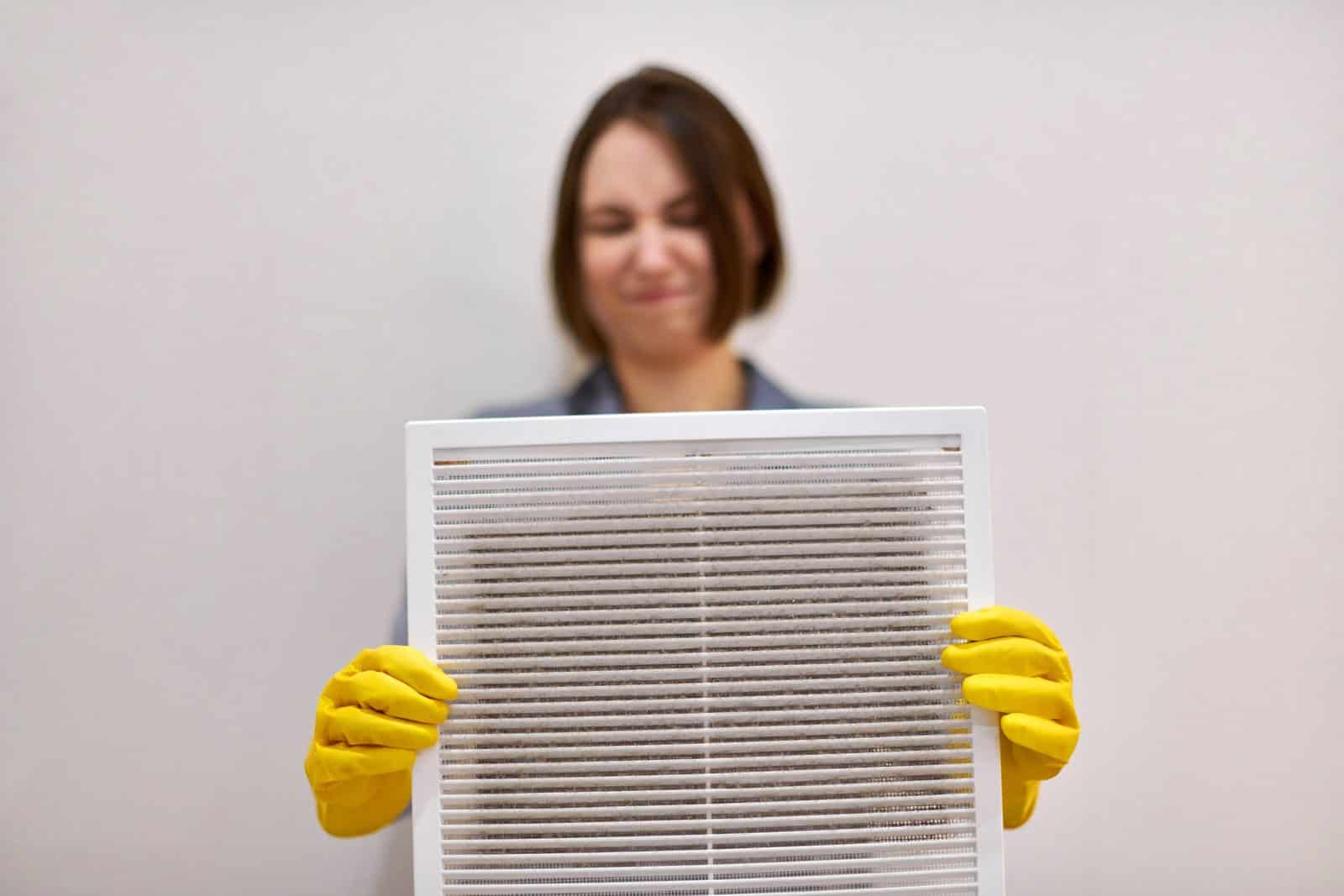
Filters come out of the cooling season heavily loaded too, which is why a fresh filter belongs in the system before the first heat cycle rather than after it. A fall tune-up in that window clears the accumulated dust before the first run burns it off indoors, and the visit takes about an hour for most systems.
Smells That Point to a Problem
Some odors fall outside the burn-off pattern, and each of the four below comes with its own instructions.
None of them improves with waiting.
Burning Plastic or an Electrical Odor
A sharp plastic or electrical smell is not dust.
Hot wiring, a blower motor on its way out, a stray toy or rag resting against something hot. Any of those can make it. There’s no clever move here, just one boring one. Kill the system at the thermostat and leave it alone until a technician’s had eyes on it. And if the electrical smell shows up again every single time the heat kicks on, that’s the machine telling you the same thing twice.
Rotten Eggs or Sulfur
Natural gas has a rotten-egg odorant mixed in on purpose, so your nose catches leaks your eyes never would. Smell it anywhere in the house and it’s time to go.
Get everyone out first. Skip the light switches, skip the appliances, leave the phone in your pocket until you’re outside. Once you’re out, call Southwest Gas or 911. Their Southwest Gas safety page says the same thing.
A Musty or Moldy Smell
Musty is a different animal. The burner’s probably fine. That smell tends to live in the ducts, or in moisture sitting somewhere along the airflow path. A damp filter can do it. So can condensation near the indoor unit, or ducts lined with years of dust. If it hangs around run after run, get it looked at, because whatever’s making that smell is riding along in every breath of heated air the house gets.
Exhaust or a Sharp Chemical Smell
An exhaust-type or sharp chemical smell during heating is the one that raises the carbon monoxide question. A cracked heat exchanger can let combustion byproducts slip into the air the blower is pushing through the house. Burner flames that run yellow or flickery instead of steady blue go on the same warning list, and so does soot around the unit. Here’s the ugly part. Carbon monoxide itself has no smell at all, which is exactly why the EPA’s guidance on carbon monoxide hammers on working CO detectors. Chemical smell plus a CO alarm going off? Leave first. The equipment can wait.
Signs the Smell Needs a Technician
The rule of thumb is short. Burn-off fades and stays gone. Everything else gets a professional.
Everything else covers more ground than people expect. A smell that outlasts the first runs. Smoke, anywhere, any amount. A breaker that trips the moment the heat starts. A CO alarm. A burner flame running yellow when it should be blue. And sometimes the equipment checks out clean and the odor turns out to be living in the ductwork, which a technician can chase down too.
Prompt heating repair on a small October fault is a far better deal than an emergency call on the first freezing night in December. Henderson homeowners can book furnace repair in Henderson the same way.
Frequently Asked Questions
Why does my heater smell like burning?
Nine times out of ten it’s dust cooking off the heat exchanger and burners after a long idle summer, and that fades fast. The exceptions matter though. A burning smell that shows up mid-season, comes back every cycle, or has a plastic or electrical edge to it isn’t dust anymore. Shut it down and get it inspected.
How long does the burning smell last when you first turn on the heat?
A run or two, that’s it. Strongest at the very first start, weaker each cycle as the dust cooks away. Still smelling it after that? Then it was never burn-off to begin with, and lingering smells are one of the standard reasons people end up scheduling service.
Why does my furnace smell like gas?
That odorant exists for one reason, to warn you, and it’s working. Don’t stand there diagnosing it. Get out without touching any switches, then call Southwest Gas or 911 once you’re outside. Gas is the one smell on this page where the answer starts at the front door.
Why does my heater smell like burning plastic?
A plastic odor points at overheating components rather than dust, with wiring and blower motor trouble as the common sources. The system belongs off until it’s inspected. One that comes back on every start means the fault’s still live, not leftover.
Why does my furnace smell musty?
Usually moisture or dust somewhere in the airflow path. Could be a damp filter, could be buildup in the ducts, could be condensation near the indoor unit. When it won’t quit across runs, book an inspection, since the ducts share that air with every room in the house. And if the smell seems tied to the water heater instead, that’s its own problem with its own causes, even when the timing lines up.
Next Steps for Las Vegas Homeowners
Five small things, none of them hard. Fresh filter in before the first run, not after. CO detector tested, new batteries while you’re standing there. Crack a window for that first cycle and the burn-off clears out quicker.
If something lingers, write it down. What it smells like, when it shows up. That little note saves real diagnostic time later. And the fall tune-up? October or November, while the mild weeks keep the calendar wide open.
Most first-run odors are the system clearing a summer’s worth of dust, and the fade-and-gone pattern gives them away. Anything sharper or longer-lasting has earned a professional look. Gas smells skip every step except the front door.
The machinery behind that first warm cycle is covered in the complete Las Vegas HVAC guide.
