
Frozen AC Repair in Mountain's Edge, NV
- 24/7 Emergency Service
- Financing Available
- A+ BBB Rated
- Licensed & Insured
Signs Your Mountain’s Edge AC Has Frozen Up
A frozen air conditioner in the desert catches people off guard, but the signs are unmistakable once you know to look. Recognizing them early, and shutting the system down, prevents water damage and protects the compressor.
- Visible ice or frost on the copper refrigerant lines or the indoor unit
- The system runs constantly but blows warm or barely cool air
- Water pools around the indoor unit as ice melts and refreezes
- The airflow from the vents has dropped off sharply
- The outdoor unit runs while cooling has all but stopped
- The system was cooling fine, then gradually lost its cold
Dust from open desert and construction around Mountain’s Edge makes freezing more likely, not less. Fine grit clogs the air filter and coats the return path, and that restricted airflow across the coil is one of the most common freezing triggers here. Combine a dust-loaded filter with the long runtime a desert summer demands, and a system that should never see ice in this climate can frost over within a day.

Why an Air Conditioner Freezes in the Desert Heat
A frozen coil comes down to two root problems: not enough airflow across the coil, or not enough refrigerant in the system. The breakdown below explains the causes the technician looks for and why simply thawing the ice never fixes it. The point is to find the reason, because a thaw without a cause returns as ice.
-
Restricted airflow from a dirty filter
A clogged filter is the single most common freeze cause, since it starves the coil of the warm air that keeps it above freezing. Once airflow drops, condensation on the coil turns to frost and then to ice. Replacing the filter and confirming airflow is the first thing checked.
-
Blocked returns and closed vents
Beyond the filter, closed supply registers, blocked returns, and duct restrictions all cut the airflow the coil needs. A coil starved this way freezes the same as one behind a dirty filter. The technician checks the whole airflow path, not just the filter.
-
Low refrigerant from a leak
A refrigerant leak drops the pressure in the coil, and low pressure lets the coil temperature fall below freezing. This is why a system that slowly lost its cold often freezes. Recharging without finding the leak only delays the next freeze, so leak detection is part of the fix.
-
A failing blower reducing airflow
A weak or failing blower moves too little air across the coil, producing the same starved condition as a dirty filter. When the airflow problem traces to the blower rather than the filter, the blower is addressed. Testing airflow at the handler identifies this.
-
Why thawing alone never works
Turning the system off thaws the ice, but the coil freezes again the moment the underlying airflow or refrigerant problem is still present. A proper repair diagnoses and corrects the cause during the same visit. Chasing the ice without the cause is the mistake that turns one freeze into a pattern.

Related Services Worth Considering
A frozen system points back to the coil, the blower, and the compressor, since freezing both comes from and threatens those parts. These related repairs stay tight to the freeze.
-
Evaporator coil repair
A leaking or dirty coil is a frequent freeze cause, so coil diagnosis is often part of a frozen-unit call. When the coil is the root, it gets repaired at the source.
See Details
-
Blower motor repair
When restricted airflow traces to the blower, the blower service corrects the airflow that is freezing the coil. Restoring airflow is often the whole fix.
See Details
-
Emergency AC repair
A frozen system in peak heat leaves a home without cooling until it is thawed and fixed. After-hours dispatch covers those urgent freeze-ups.
-
Air conditioning contractor services
Frozen-unit repair is one part of the full air conditioning service the company runs across the valley, from diagnostics to complete replacements.
The Situations That Lead to a Frozen System
Frozen-unit calls usually follow a period of declining cooling, so describing how the cold faded helps the technician trace the cause.
- The system was cooling normally, slowly lost its cold, and now there is visible ice on the lines
- The vents barely push air, the house is warm, and the outdoor unit keeps running
- Ice keeps returning after each thaw, which points to an unresolved airflow or refrigerant problem
Running a frozen system is where the real damage happens. Ice restricts refrigerant flow and can send liquid refrigerant back to the compressor, which is one of the ways a freeze turns into an expensive compressor failure. The melting ice also leaves water where it can damage the air handler and surrounding materials. Shutting the system off at the first sign of ice and calling for a diagnosis is the move that keeps a freeze cheap.
From Frozen to Cooling, Step by Step
- The technician has you shut the system off ahead of the visit where possible, since a coil buried in ice cannot be diagnosed until it thaws. Running the fan without cooling speeds a safe thaw.
- On arrival, the extent of the ice and the condition of the unit are assessed, and the coil is allowed to finish thawing so pressures and airflow can be read accurately. Diagnosis has to wait for a clear coil.
- Airflow is checked first: the filter, the returns, the vents, and the blower, since a starved coil is the most common freeze cause. Any restriction found here is corrected.
- Refrigerant pressures are measured next, and if they read low, leak detection locates the source rather than masking it with a recharge. Finding the leak is what prevents the next freeze.
- With the cause corrected, whether airflow or refrigerant, the system is run and the temperature split across the coil is verified to confirm normal cooling has returned without refreezing. You leave with a clear explanation of why it froze and what was fixed.
Serving Mountain’s Edge and the Southwest Valley
Trucks reach Mountain’s Edge from the East Sunset Road shop on a routine dispatch within the metro, so a frozen-unit diagnosis is available without a long wait, with same-day service the usual outcome. Coverage reaches Mountain’s Edge, Spring Valley, Silverado Ranch, Southern Highlands, Enterprise, Rhodes Ranch, Summerlin, Las Vegas, Henderson, and Paradise. A quick call confirms coverage for any address just beyond the list.

Why Mountain’s Edge Homeowners Trust the Freeze Repair
The capability gap on frozen units is discipline: it is easy to thaw the ice, collect payment, and leave, and much harder to find and fix the airflow or refrigerant cause so it stays cold. Pure Plumbing & Air diagnoses the root cause during the same visit, so the freeze does not return next week. The company has diagnosed valley systems since 2013 and holds Nevada licenses #77906 and #88741, verifiable through the Nevada State Contractors Board, which holds the work to state standard.
Service runs 24/7, which matters when a system freezes during a heat wave and the home has no cooling until it is fixed. Pure Plan membership adds seasonal filter and airflow checks that head off the most common freeze cause before it starts, along with priority scheduling. The company also carries strong customer reviews across the valley for finding the real cause rather than the quick thaw, and its licensed HVAC contractor team handles everything from a filter and airflow fix to a full replacement.
Frozen AC Repair FAQs for Mountain’s Edge, NV
Stop the Freeze at Its Source
Ice on a desert air conditioner is always a signal, not the problem itself. Pure Plumbing & Air thaws Mountain’s Edge systems safely, finds the airflow or refrigerant cause, and fixes it so the unit stays cold. Turn the system off and call (725) 210-6034 to schedule your diagnostic.
HVAC Services We Offer Includes:
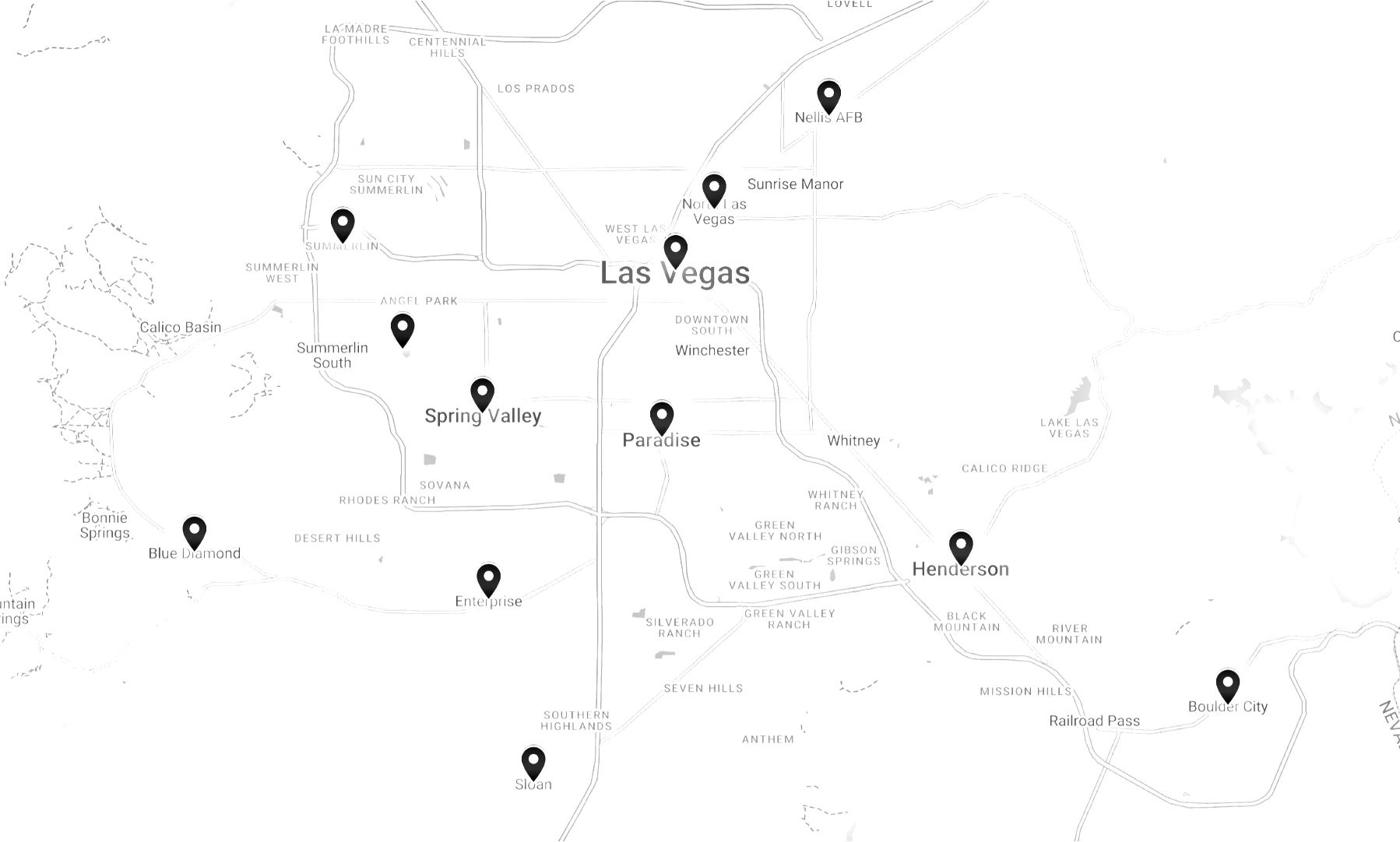
We serve the whole Las Vegas valley All 17 areas
Frozen AC Repair in Mountain's Edge in every area on this list. Eight to nine months of run time a year is hard on equipment anywhere in this valley.
West valley
North valley
East & south