
Evaporator Coil Repair in North Ridge, NV
- 24/7 Emergency Service
- Financing Available
- A+ BBB Rated
- Licensed & Insured
Signs the Indoor Coil Is Failing
The coil sits out of sight inside the air handler, so it announces trouble through the air and the ceiling instead.
- Weak or barely cool air at the vents while the outdoor unit runs fine.
- Ice on the copper lines or visible frost at the air handler.
- A faint hissing sound near the indoor unit.
- A sweet, chemical odor in the supply air.
- A musty, dirty-sock smell when cooling starts up.
- Water stains spreading on a ceiling below the air handler.
- Cooling that runs longer every week for the same result.
- A system that needs a refrigerant top-off more than once.
The repeat top-off is the sign most homeowners rationalize away. Refrigerant does not get used up like fuel, so a system that keeps needing more has a leak, and on the indoor side the coil is the usual suspect. Every pound added without fixing the leak is money that drains back out through the same pinhole.
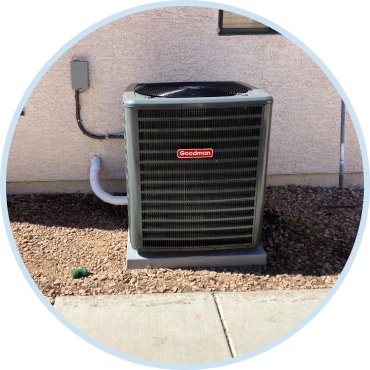
The Coil That Does the Actual Cooling
The outdoor unit gets the attention, and the indoor coil does the work people call cooling. Understanding its failure modes explains most warm-house mysteries.
-
The cold half of the loop
The ac evaporator coil is a web of copper tubing and aluminum fins where cold refrigerant absorbs the heat from every cubic foot of air the blower pushes through it. Cooled air continues to the ducts, the captured heat rides the refrigerant outdoors, and the humidity in the air condenses on the fins and drains away. Every comfort function of the system passes through this one component.
-
Fouling in a dusty valley
Fine desert dust slips past average filters and mats onto the coil’s wet fins, and a dirty evaporator coil insulates itself from the air it is supposed to cool. Cooling output drops, runtimes stretch, and the coil surface can fall below freezing behind the blanket of grime. Professional evaporator coil cleaning strips that layer without bending the fins, a job that pays for itself in runtime on systems that cool eight or nine months a year.
-
Pinhole leaks and corrosion
Copper coils develop leaks from years of vibration and from formicary corrosion, a chemical attack that drills microscopic tunnels through tubing from the inside. The evidence is a sweet odor, oil residue at the coil, a failed pressure test, or the repeat top-off pattern. Pinholes rarely arrive alone, which shapes the repair-or-replace call below.
-
Ice as a symptom, never a cause
A frozen evaporator coil looks dramatic and points elsewhere: starved airflow or a low charge dropped the coil below freezing, and the ice grew from there. The freeze gets thawed, and the diagnosis has to find what caused it, or the ice returns on the next hot afternoon.
-
The attic factor in North Ridge
Newer two-story homes around the Grand Teton Drive area and the Centennial Hills edges mostly carry their air handlers in the attic, which puts the coil, its drain pan, and every drop of condensate directly above finished ceilings. A coil problem here is never just a cooling problem, since the overflow path runs through drywall. Attic units also work in brutal summer air, which accelerates every failure mode above.

Related Services Worth a Look
Coil calls overlap with a short list of neighbors, and these are the ones that show up on the same tickets.
-
Frozen AC repair
Ice on the coil is its own diagnostic trail, from airflow to charge level. The frozen AC service thaws the system and runs down the cause behind the freeze.
See Details
-
Blower motor repair
The blower feeds the coil its airflow, and a weak motor starves the coil into freezing and fouling faster. The blower service covers the motor side of that partnership.
See Details
-
Residential AC repair
The residential service runs whole-home diagnostics for the faults that do not trace to a single component, from ducts to charge to controls.
See Details
-
AC repair
The main AC repair team covering North Ridge handles every system fault under one diagnostic, indoors and out.
See Details
The Calls That Lead to the Coil
Coil work arrives on a few familiar paths, and the route in usually predicts what the meter and the leak detector will find.
- Cooling that faded gradually across a season while the outdoor unit checked out clean.
- A second or third refrigerant top-off in two summers, the classic slow-leak signature.
- A brown ring on the ceiling under the attic air handler, often the first visible clue.
- A musty smell at every cooling startup, pointing at growth on a fouled, damp coil.
Waiting has a specific cost with this part. A leaking coil bleeds charge until the compressor runs starved and hot, a fouled coil stretches runtimes through the most expensive electric months, and an attic drain problem graduates from a pan repair to a drywall and paint project. The coil rarely fails loudly, and it never fails cheap when ignored.
From Leak Check to Cold Air Again
Coil calls follow a sequence built to prove the diagnosis before any refrigerant or parts money gets spent.
- Airflow and the temperature split across the coil get measured first, separating airflow starvation from refrigerant problems in the first fifteen minutes.
- The coil is inspected directly and leak-tested electronically, with pressure testing where the case needs proof rather than suspicion.
- The verdict gets priced honestly: fouling calls for a professional cleaning, a leaking coil calls for the repair-versus-replacement math against the system’s age, and refrigerant work runs under EPA-certified recovery practice rather than vent-and-refill shortcuts.
- A replacement coil is matched to the system’s tonnage and refrigerant type, with attic access, pan, and drain handled as part of the job rather than left as surprises.
- The charge goes in by weight, the temperature split gets verified against spec, and the drain runs clear before the truck leaves. The U.S. Department of Energy’s guide to maintaining your air conditioner puts coil care at the center of system health for good reason: capacity lives and dies on these fins.

North Ridge Streets We Cover
Crews work the north valley every day, with the attic-heavy subdivisions of this area a regular part of the route.
- North Ridge residential streets
- The Grand Teton Drive area
- Homes off Ann Road
- The Durango Drive corridor
- The 215 northwest corridor
- Neighboring Centennial Hills streets
Not listed? Call and coverage gets confirmed on the spot, since the trucks run the whole northwest valley.
The Pure Plumbing & Air Difference on Coil Work
Coil work rewards patience and punishes guessing. Pure Plumbing & Air proves the leak before quoting the fix, prices cleaning against replacement honestly, and treats attic access as part of the job instead of an upcharge surprise. The company has worked valley cooling since 2013 under Nevada licenses #77906 and #88741, holds an A+ BBB rating, and is bonded and insured in Nevada.
- Nevada contractor licenses #77906 and #88741, verifiable with the state board
- Family owned, working valley AC since 2013
- A+ BBB rated, bonded, and insured
- EPA-certified refrigerant recovery on every coil job
- Leak testing before any repair-or-replace recommendation
- Attic air handler experience across the north valley
- Upfront pricing before the work starts
- Pure Plan membership with seasonal coil checks included
Evaporator Coil Repair in North Ridge, NV FAQs
Get the Indoor Half Fixed Right
The evaporator coil does the cooling, carries the condensate, and sits above the ceiling where its failures cost the most. Pure Plumbing & Air finds coil problems with a leak test instead of a guess, prices every path honestly, and leaves with the temperature split verified. Call (702) 534-1910 to book a coil diagnostic in the north valley.
HVAC Services We Offer Includes:
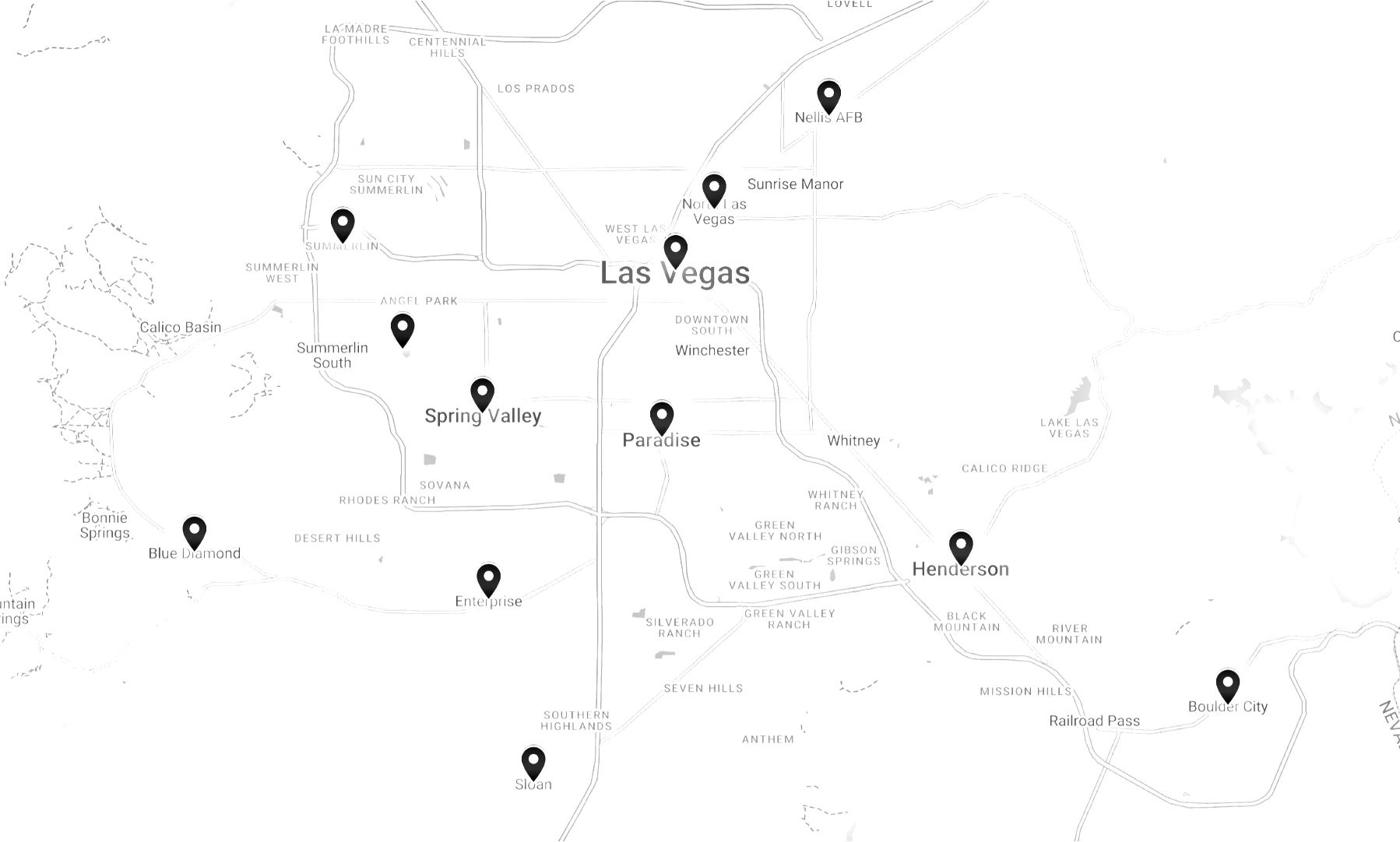
We serve the whole Las Vegas valley All 17 areas
Evaporator Coil Repair in North Ridge, valley-wide. Eight to nine months of run time a year is hard on equipment anywhere in this valley.
West valley
North valley
East & south