
Capacitor and Contactor Repair in North Ridge, NV
- 24/7 Emergency Service
- Financing Available
- A+ BBB Rated
- Licensed & Insured
Signs the Electrical Parts Are Going
The capacitor and the contactor sit at the start of every cooling cycle, so their failures show up the moment the system tries to run. These are the signals worth a call:
- The outdoor unit hums while the fan sits still.
- Clicking at the unit when the thermostat calls, with no startup behind it.
- Hesitant starts, or a compressor that tries several times before it catches.
- House lights dimming each time the cooling kicks on.
- A buzzing or chattering sound from the outdoor cabinet.
- The unit starting normally, then quitting within seconds.
- A capacitor with a swollen, domed, or leaking top on inspection.
- An outdoor unit that will not shut off even with the thermostat satisfied.
The first sign on that list is the urgent one. A humming unit with a stalled fan usually means the compressor is running with nothing to cool it, and that condition damages the most expensive part in the system within minutes. Shutting the system off at the thermostat and booking a same-day diagnostic protects the compressor while the failed part gets identified.

The Two Parts, Broken Down
Every air conditioner depends on a handful of small electrical components to start and run its motors. Two of them do most of the failing, and each dies in its own way.
-
The dual run capacitor
Most residential condensers use a single dual run capacitor, one silver can with three terminals marked HERM, FAN, and C. The HERM side boosts the compressor, the FAN side boosts the outdoor fan motor, and both motors depend on that stored charge every second they run. Each side carries a microfarad rating printed on the can, and the part is considered failed once its measured value drifts more than several percent below that rating. A weak side strains its motor long before the can dies outright, which is why testing matters more than waiting for a total failure.
-
Start capacitors and hard start kits
Some compressors need a bigger push at the first instant of startup than a run capacitor provides. An ac hard start kit adds a start capacitor and relay that deliver that momentary boost, then drop out of the circuit. A kit is a legitimate fix for a system with long refrigerant line sets or measured hard starting, and it is a bandage when the real problem is a compressor wearing out internally. The amp readings during startup tell those two situations apart.
-
The contactor
The hvac contactor is the switch that connects high voltage to the compressor and fan each time the thermostat calls. A low-voltage coil pulls a set of contact points closed, current flows, and the unit starts. That happens thousands of times across a cooling season that runs eight or nine months here, and every single closure wears the points a little more.
-
Pitting, welding, and stuck points
Contactor points fail in two directions. Pitted or burned points add electrical resistance, which creates heat, voltage drop, and the chattering sound of a part arcing instead of connecting cleanly. Points that weld themselves shut create the opposite problem: an outdoor unit that keeps running after the thermostat stops calling, racking up runtime and risk. Desert grit accelerates both failures by working into the contact surfaces, and monsoon outflows push plenty of it into cabinets across the north valley every summer.
-
Desert heat and capacitor life
A capacitor stores its charge in an electrolytic fill that degrades faster as temperature climbs. Manufacturers rate the parts for ambient conditions that a west-facing condenser on the Durango Drive corridor blows past every July afternoon, with cabinet temperatures riding far above the air temperature in direct sun. The practical result is a part rated for years of service that often gives out in roughly five summers of this exposure, and sooner on units running long daily cycles. The Electrical Safety Foundation International’s guide to home electrical systems covers why components like these belong behind a licensed hand: a capacitor holds a dangerous stored charge even after the power is disconnected.

Related Services Worth a Look
Electrical calls travel with a few close neighbors, and these are the services that come up on the same visits.
-
AC compressor repair
A weak capacitor makes the compressor strain on every start, so capacitor calls and compressor calls arrive together often. The compressor service covers the diagnostics that separate a strained motor from a dying one.
See Details
-
Condenser fan motor repair
The fan motor shares the capacitor’s FAN terminal, and a stalled fan is the failure the live hub calls this area’s most common. The fan service covers the motor itself when the capacitor tests healthy.
See Details
-
Compressor replacement
The repair this page exists to prevent. When electrical parts run weak for too long, the compressor pays, and the replacement service lays out the honest math when that day comes.
See Details
-
AC repair
For the full range of cooling diagnostics across every fault, the main AC repair service for North Ridge covers the whole system in one place.
See Details
The Calls That Start With These Parts
Electrical failures cluster around predictable moments in the North Ridge cooling season, and the pattern of the failure says a lot about the cause.
- The first 110-degree stretch of early summer, when every marginal capacitor in the valley gets found out at once.
- The morning after a monsoon storm, when grit and power blinks leave units clicking without starting.
- A unit that ran fine at dusk and hums uselessly the next afternoon, classic for a capacitor that finally let go under peak heat.
- A brand-new capacitor that dies within a season, which points past the part to a fan motor or compressor dragging it down.
That last pattern is the one that separates a parts swap from a real diagnosis. A healthy capacitor killed early is a symptom, and replacing it without measuring the motors it feeds just schedules the next failure. Delay carries its own bill: a compressor limping on a weak capacitor pulls high current every start, and the part that eventually fails from that strain costs ten times what the capacitor did.
From Diagnosis to a Verified Fix
Every electrical call follows the same sequence, built to fix the cause rather than the symptom.
- Power to the unit is confirmed and the disconnect is pulled, because half of one-part diagnoses start with ruling out the panel and the wiring first.
- The capacitor is discharged safely, then measured with a meter against the microfarad rating printed on the can. The contactor is inspected for pitting and tested for clean closure under its coil voltage.
- The failed part comes off the truck stock, matched to the spec on the equipment plate rather than a close-enough universal. Both licenses on file with the Nevada State Contractors Board cover this work.
- The system restarts while amp draw and voltage are read at the compressor and fan, confirming the new part is delivering what the motors need.
- The cause gets checked before the truck leaves: fan bearing drag and compressor draw are measured, so a part killed by a failing motor is caught now instead of next summer.

North Ridge Streets We Cover
Crews run the north valley daily, and North Ridge sits square in the coverage area with capacitors and contactors stocked on every truck.
- The residential streets of North Ridge proper
- The Durango Drive corridor
- Homes off Ann Road
- The Grand Teton Drive area
- The 215 northwest corridor
- Neighboring Centennial Hills streets
Not on the list? Call and coverage gets confirmed on the spot, since the trucks work the whole northwest valley.
The Pure Plumbing & Air Difference on Electrical Repairs
The cheap version of this repair is a universal capacitor clipped in without a single measurement, and it is why so many units get three capacitors in five years. Pure Plumbing & Air reads the failed part against its spec, matches the replacement to the equipment plate, and measures the motors the part feeds, which is the difference between fixing the failure and renting relief from it. The company has run valley cooling calls since 2013 under Nevada licenses #77906 and #88741, holds an A+ BBB rating, and is bonded and insured in Nevada.
Trucks stock the common microfarad ratings and contactor sizes these systems use, which is why most North Ridge electrical repairs close in one visit. Service runs 24/7 for the no-cool calls that cannot wait, and the Pure Plan membership adds seasonal tune-ups that catch weak capacitors before the heat does, plus priority scheduling and repair discounts.
- Nevada contractor licenses #77906 and #88741, verifiable with the state board
- Family owned, working valley AC since 2013
- A+ BBB rated, bonded, and insured
- Capacitors and contactors stocked on every truck
- Parts measured against spec before and after replacement
- Upfront pricing before the work starts
- 24/7 availability for no-cool emergencies
- Pure Plan membership with priority scheduling
Capacitor and Contactor Repair in North Ridge, NV FAQs
Fix the Small Part Before the Big One Pays
The capacitor and the contactor are the cheapest parts in the cabinet and the ones this climate kills first, and every summer they take down compressors that a one-visit repair would have saved. Pure Plumbing & Air tests against spec, carries the parts, and verifies the fix by the numbers before the truck leaves North Ridge. Call (702) 534-1910 to book a same-day diagnostic.
HVAC Services We Offer Includes:
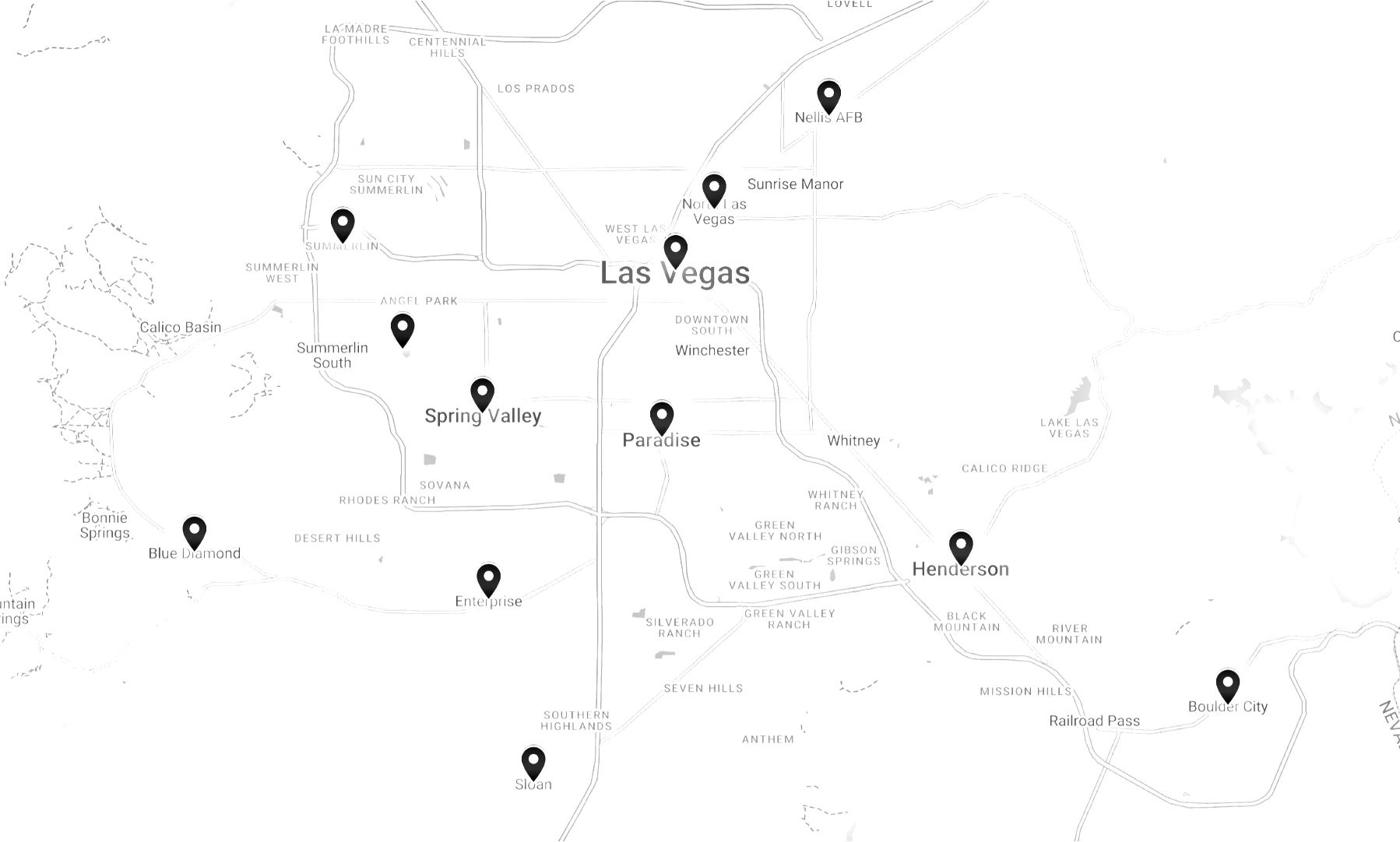
We serve the whole Las Vegas valley All 17 areas
Capacitor and Contactor Repair in North Ridge, valley-wide. Eight to nine months of run time a year is hard on equipment anywhere in this valley.
West valley
North valley
East & south