

Why does my AC keep tripping the breaker every afternoon right as the heat peaks? East valley homeowners ask that question all summer, usually from a garage with a flashlight pointed at the panel. The breaker is not the villain in this story. It is the messenger, and the message is that something downstream is pulling more current than the circuit can safely carry. Here is what the trips mean, the seven faults that cause them, and the line between a safe homeowner check and a job for a licensed technician.
A Tripping Breaker Is a Message, Not a Nuisance
The breaker exists to protect the wiring, not the air conditioner. The Electrical Safety Foundation International’s guide to home electrical systems puts it plainly: breakers stop current the moment it climbs past what the circuit can safely handle, and that interruption is what stands between an overloaded wire and a fire. A single trip on a brutal afternoon earns one reset. A breaker that snaps off again within minutes or days has found a real problem, and feeding it resets forces electricity through a fault over and over. The safe response when an ac breaker keeps tripping is to leave it off, shut the system down at the thermostat, and treat the pattern as a diagnosis waiting to happen.
Seven Faults Behind Repeat Trips
Nearly every repeat trip traces to one of seven causes, and most of them live outside the panel entirely.
A weak run capacitor
The capacitor gives the compressor its starting push. A weak one makes the motor strain against startup, pulling a surge of current that snaps the breaker the moment the cooling kicks on. Testing and capacitor and contactor repair catch this one early, before the strain spreads to the compressor itself.
A dirt-packed condenser coil
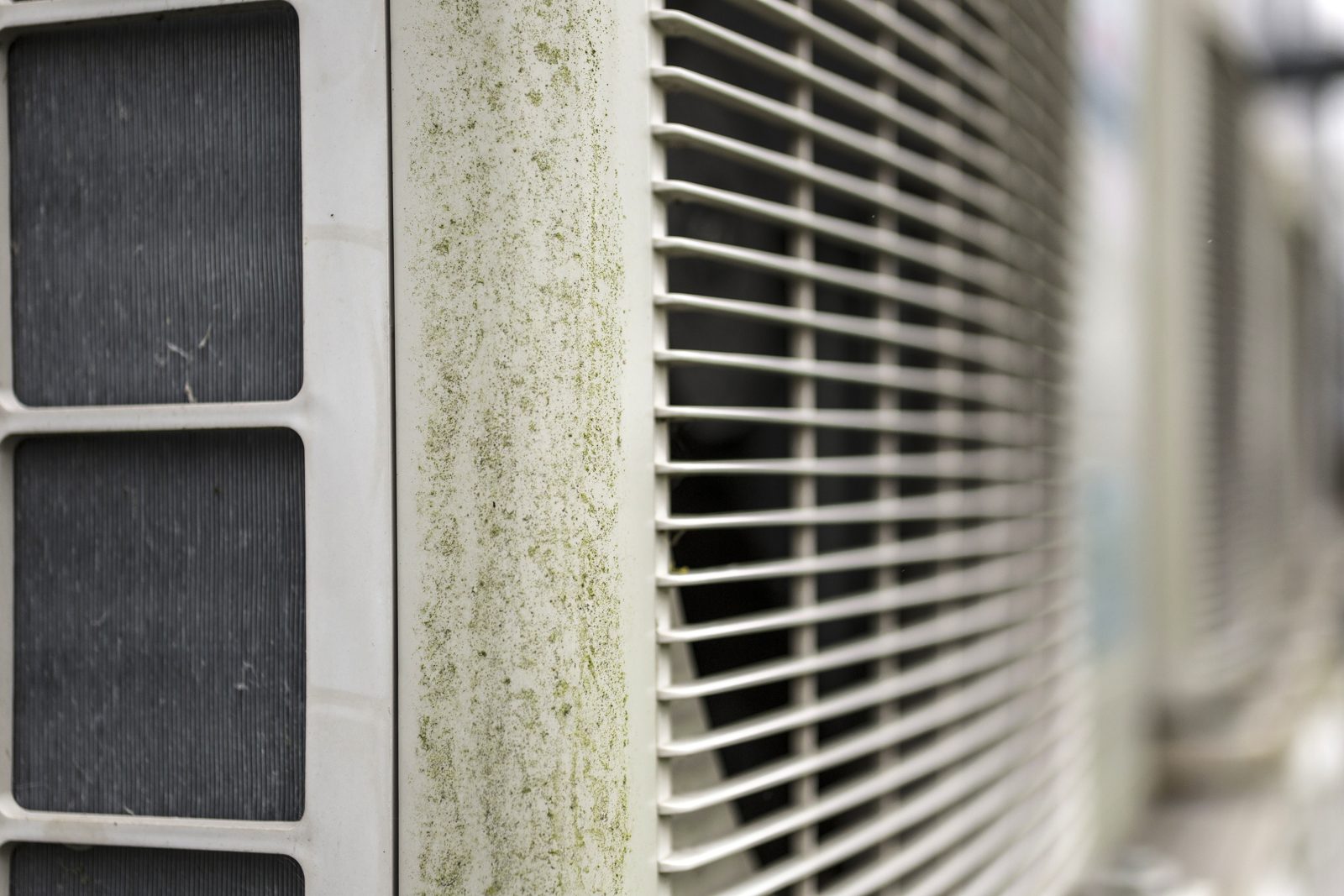
The outdoor coil sheds the heat pulled from the house. Wrap it in a blanket of desert dust and the system cannot dump that heat, so pressures climb, the compressor works harder, and amp draw rises until the breaker gives out.
A hard-starting compressor
Compressors wear internally with age, and a worn one draws massive current trying to spin up, sometimes close to its locked-rotor rating. Trips right at startup point here, and AC compressor repair diagnostics separate a saveable motor from one on its way out.
A worn condenser fan motor
The fan moves air across the outdoor coil. A dragging or seized fan sends system pressure soaring within minutes of startup, and the overloaded compressor takes the breaker down with it. Prompt condenser fan motor repair protects the far more expensive part sitting next to it.
A low refrigerant charge
A starved system runs longer cycles at higher temperatures, and a compressor running hot pulls more current the whole time. The trip arrives late in the cycle rather than at startup, often on the hottest stretch of the day.
Heat-damaged wiring and contactors
Connections loosen as copper expands and contracts through years of desert summers, and a pitted contactor arcs every time it closes. Loose, arcing connections short with little warning, and this cause trips the breaker instantly rather than minutes in.
A breaker at the end of its life
Breakers weaken with age and repeated heat, and a tired one starts tripping below its rated load. This is the one cause that lives in the panel, and it still gets confirmed last, after the equipment checks out, because a new breaker on a faulted circuit just hides the warning.
East Valley Heat Raises the Stakes
The east side of the valley works its cooling equipment hard. Housing across Sunrise Manor and Whitney skews older, which often means panels and wiring installed decades before modern cooling loads, plus a share of R-22-era systems still running past their design life. Add the physics of a Las Vegas July: systems cycling 12 or more hours a day, amp draw climbing with every degree past 110, and monsoon outflows pushing dust off the Boulder Highway corridor straight into outdoor coils. A circuit that held up fine in April can sit right at its limit by August, and any of the seven faults above becomes the push that sends it over.
Safe Checks Before the Service Call
A few checks cost nothing and rule out the simple stuff. Replace a clogged filter, open every supply vent, confirm the thermostat is set to cool rather than fighting a heat setting, and clear leaves or debris from around the outdoor unit. The hard line sits at the equipment cabinets and the panel itself: capacitors hold a dangerous charge long after the power is off, and the panel’s interior belongs to licensed hands only. Past that line, the answer comes from measurement. A proper AC repair diagnostic reads amp draw against the motor ratings, tests the capacitor’s actual capacitance, checks refrigerant pressures, and inspects every connection under load, which pins the trip to its true cause instead of guessing. Homes with older equipment can lean on AC repair for aging systems, where the diagnosis weighs the whole unit’s condition, not just the part that tripped.
Breaker Trip FAQs
Can I keep resetting the breaker when the AC trips?
One reset is reasonable after an extreme afternoon. Repeated resets push current through a fault again and again, which risks wiring damage, equipment failure, and fire. A breaker that trips twice in a short span should stay off until the cause is found.
Why does my AC trip the breaker right at startup?
Startup trips point at the surge moment: a weak run capacitor, a hard-starting compressor, or a loose connection arcing under the inrush. Trips that come minutes or hours into a cycle point instead at heat buildup from a dirty coil, a failing fan, or a low charge.
Is a tripping AC breaker dangerous?
The trip itself is the safety system working. The danger sits in ignoring the pattern or overriding it, since the underlying fault involves excess current, heat, or arcing. Leaving the system off after repeat trips removes the risk while the cause gets diagnosed.
Will a new breaker fix the problem?
Only when testing proves the breaker itself has weakened, which is the least common cause. Swapping a breaker without ruling out the equipment can mask a real electrical fault and let it worsen behind a fresh switch.
Does an AC that keeps tripping need to be replaced?
Not usually. Most trip causes are repairable parts: a capacitor, a fan motor, a cleaning, a wiring correction. Replacement enters the conversation when the compressor itself is failing on an older system, where the diagnosis weighs the fix against the unit’s remaining life.
The Bottom Line on Repeat Trips
A breaker that keeps snapping off is telling the truth about a circuit under stress. The cause is usually a fixable part upstream, a capacitor, a coil, a fan, a connection, made worse by the long cycles and heavy amp draw of an east valley summer. Reset once, watch closely, and treat the second trip as the end of guessing. From there, measurement finds the fault faster and cheaper than another afternoon of flipping the switch back on.
Pure Plumbing & Air has served Las Vegas Valley homeowners since 2013 and holds Nevada contractor licenses #77906 and #88741.
