

You set the thermostat to 74. Downstairs feels right. You walk up to the bedrooms and it is 82 and climbing. If you have ever asked why is my upstairs hot when the AC is on, you are in a good company, because it is one of the most common comfort complaints in two-story Summerlin homes.
The system is usually running fine. The cold air is just not reaching the second floor the way it reaches the first. Before you assume the whole unit is failing, it helps to know what is happening, and when the answer is a quick repair instead of a bigger airflow problem. If the cooling loss came on fast, professional AC repair in Summerlin is the right first call.
Heat Rises, and Summerlin’s Two-Story Floor Plans Make It Worse
Hot air moves up. That is simple physics, and in a two-story home it works against you all summer. The second floor collects the heat drifting up the stairwell while the first floor stays comfortable near the thermostat.
Summerlin adds its own pressure on top of that. Most homes here run a single-zone system: one thermostat, usually mounted downstairs, controlling the whole house. Once the downstairs sensor reads 74, the system shuts off, even when the upstairs is still sitting at 82. The thermostat has no way of knowing the bedrooms are hot.
The harder problem sits over your head. In most Summerlin two-story builds, from the older Sun City Summerlin homes to the newer construction in The Vistas and The Paseos, the air handler and much of the ductwork live in the attic.
On a July afternoon, a Las Vegas attic can reach 140 degrees. Cold air moving through metal and flex duct in that kind of heat warms up before it ever reaches an upstairs vent. The longer and more winding the run to a far bedroom, the more cooling it loses on the way.
On a two-story in The Ridges this past July, a homeowner had lived with an 8-degree gap between floors for two summers before calling. Downstairs was fine. The upstairs office was unusable by 2 p.m. The system was not broken. The upstairs duct runs were long, partly disconnected at one boot, and baking in attic heat. That mix is typical for the area.
The Usual Causes in Summerlin Homes
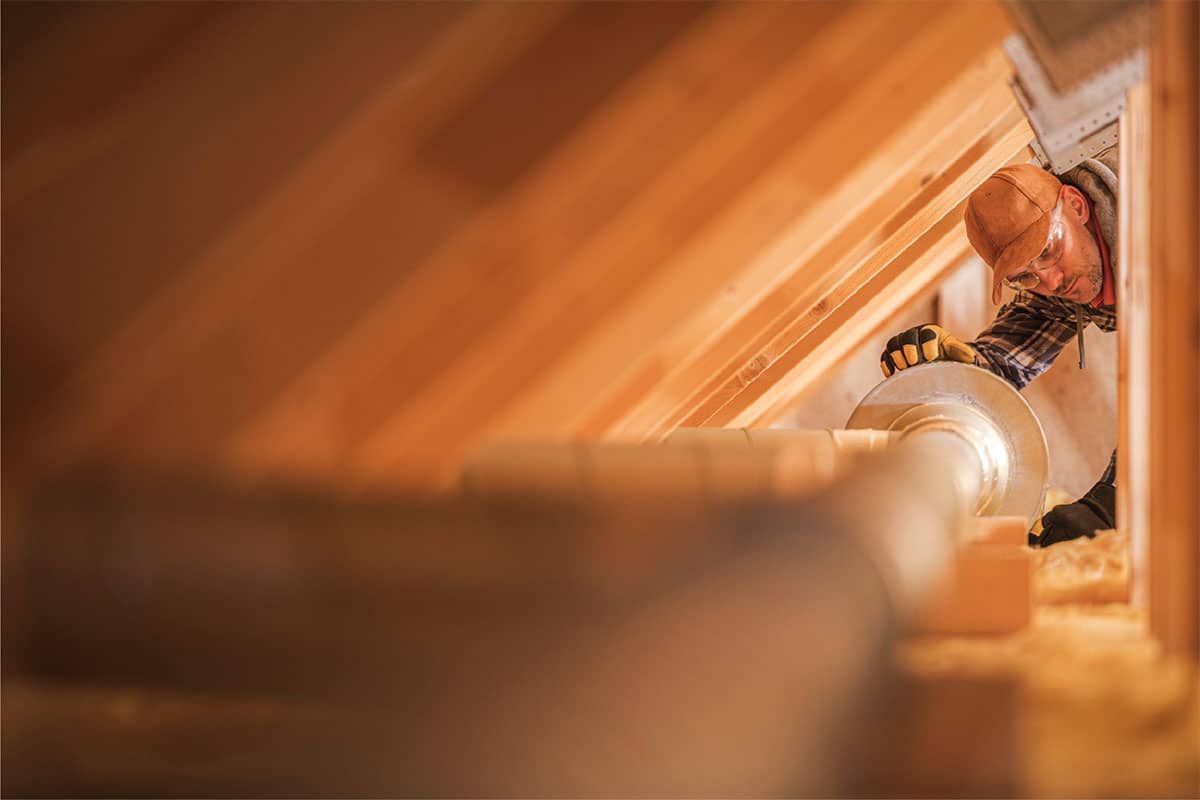
A single-zone system trying to cool two floors
One thermostat cannot balance two floors that carry different heat loads. The downstairs satisfies first and the system stops, leaving the upstairs short. When the upstairs needs its own temperature year round, a zoned HVAC system adds dampers and a second thermostat so each floor gets independent control.
Attic ductwork losing cold air to 140-degree heat
This is the quiet driver behind most warm-upstairs calls in the valley. Cooled air warms in transit through a superheated attic, so the air leaving an upstairs vent is several degrees warmer than what left the air handler. West-facing rooms toward Red Rock Canyon take the full afternoon sun, which piles more load onto the rooms that already get the least cold air.
Leaks and disconnections in the duct run
A loose boot or a separated flex joint dumps cold air into the attic instead of the bedroom. The U.S. Department of Energy and ENERGY STAR estimate that a typical home loses roughly 20 to 30 percent of the air moving through its ducts to leaks and poor connections. In a 140-degree attic, that loss shows up fast upstairs, and duct repair is the fix when airflow is weak at the vents.
A failing part that shows up upstairs first
People miss this one. When a capacitor weakens or the refrigerant charge drops, the system loses cooling capacity. The first place you feel that lost capacity is the hardest room to cool, which is almost always upstairs. A weak capacitor runs about $150 to $400 to replace and is far cheaper than the compressor it can take down if it is left alone. If your upstairs got noticeably worse over a week or two, treat it as a repair first and book same-day AC repair in Summerlin.
A clogged filter choking airflow
A dirty filter drops airflow across the whole house, and the upstairs feels it first. It is the one thing you can check without tools, and a fresh filter sometimes recovers a few degrees on its own.
Is It a Repair Problem or a Design Problem?
This is the question that decides who you call and what it costs. The timing tells you most of what you need to know.
A gap that is new or getting worse quickly points to a failing part, so a diagnostic and repair come first. A gap that has been there since you moved in points to air distribution, not a broken component. In that case the system was never set up to cool two floors evenly, and air balancing adjusts the dampers so each floor gets its fair share of cold air.
Some rooms stay stubborn no matter what you do to the central system. A bonus room over the garage or a far corner bedroom that never holds temperature is often a candidate for a ductless mini-split, which cools that one space on its own without overdriving the main system.
What to Do Before the Next Heat Wave

A few steps make the problem clearer and any service visit faster:
- Check the filter first. Replace it if it looks gray or packed.
- Write down when the gap started and which rooms are worst. A new problem points to a repair. A lifelong problem points to airflow design.
- Leave your vents open. Closing downstairs vents to push air upstairs raises duct pressure and usually makes things worse, not better.
- Book a diagnostic before the first sustained 110-degree stretch in late June, when no-cool calls peak across the valley and scheduling gets tight.
A licensed technician can read static pressure and airflow, check the refrigerant charge and capacitor, and inspect the dampers and duct runs, then tell you whether you are looking at a repair, a balancing adjustment, or a zoning upgrade.
Pure Plumbing & Air has worked on Summerlin systems since 2013, from Sun City Summerlin to The Ridges and Red Rock Country Club, and holds Nevada contractor licenses #77906 and #88741. Pure Plan members get annual maintenance, priority scheduling, and discounted parts, which keeps small airflow issues from turning into July emergencies.
To stop guessing about why your upstairs is hot when the AC is on, schedule a diagnostic with Pure Plumbing & Air and get a clear read on the cause before peak summer heat.
Frequently Asked Questions
Why is my upstairs hotter than downstairs even when the AC runs?
Heat rises, so the second floor collects warm air while the downstairs thermostat reads comfortable and shuts the system off. In Summerlin two-story homes, attic ductwork running through 140-degree summer heat loses cooling before it reaches the upstairs vents. The result is a real temperature gap even with a healthy system.
How do I cool a hot upstairs in a two-story Summerlin home?
Start by finding the cause. A new or worsening gap often points to a failing part like a capacitor or low refrigerant. A lifelong gap usually means the ducts need balancing or the home needs a second zone. A technician can measure airflow and tell you which fix fits your house.
Is a warm upstairs an AC repair problem or a duct problem?
It can be either, and the timing is the clue. If the upstairs got worse over days or weeks, a component is likely failing and repair comes first. If it has always been uneven, the cause is air distribution, which points to balancing, duct repair, or zoning.
Will closing downstairs vents push more cold air upstairs?
Not reliably, and it often backfires. Closing vents raises pressure in the duct system, which can widen leaks and strain the blower. Open vents and balanced dampers move air more evenly than blocked ones.
Why does my upstairs get hot at night in summer?
The home releases heat stored in the roof, attic, and walls through the evening, and that heat keeps drifting upstairs after sunset. West-facing Summerlin rooms that took afternoon sun toward Red Rock Canyon hold heat the longest. A single-zone system set for downstairs comfort rarely keeps up with that load upstairs.