
Ever stepped into the shower after a long Vegas day and felt the water turn cold too soon? Many Las Vegas families deal with the same issue: old water heaters that can’t keep up with today’s busy households.
Between hard water, busy households, and rising energy costs, Las Vegas water heaters work overtime. That’s why more homeowners are comparing tankless vs. traditional systems and asking a practical question: Is a tank upgrade enough, or is it time for a tankless upgrade?
If you’re planning a tankless water heater installation in Las Vegas, this guide will help you choose with confidence. We’ll break down how each option performs in real homes, what it costs to install and maintain, and what matters most in our desert climate, including mineral buildup and efficiency.
At Pure Plumbing & Air, we install and service both tank and tankless systems across the valley. Our goal is simple: help you get reliable hot water, better efficiency, and a setup that fits your home and budget.
If you want the quick answer, start here.
Quick Decision Snapshot: Tank vs. Tankless
Pick a traditional tank if you want:
- Lower upfront cost and a simple swap
- Basic, predictable hot water needs (smaller household)
- Fast replacement with minimal changes to your setup
Pick a tankless system if you want:
- Back-to-back showers without running out
- Lower energy waste and stronger long-term value
- A longer-lasting system (with regular descaling for Vegas’ hard water)
Not sure? Here’s the safest next step: schedule an in-home evaluation. A licensed tech can check your current setup, confirm sizing, and tell you if your home needs any upgrades for a smooth installation.
Table of Contents
- How Water Heating Works
- Traditional Tank Water Heaters: Reliable, Simple, and Budget-Friendly
- Tankless Water Heaters: Built for Busy Homes and Long-Term Savings
- Comparing Energy Use & Costs in Real Terms
- Rebates, Tax Credits & Incentives (When Available)
- The Vegas Factor: Hard Water, Energy Bills & Desert Climate
- Sizing Your Water Heater the Right Way
- Installation Insights: What to Expect and What to Avoid
- Maintenance That Pays Off
- Real Home Example: From Frustration to Flow
- The Verdict: Which Water Heater Is Right for You?
- FAQ: Tankless Water Heater Installation in Las Vegas
- Your Las Vegas Water Heater Experts
How Water Heating Works
Both systems heat cold water and send it to your showers, sinks, and appliances. The big difference is where the hot water “lives”: in a tank that stays hot, or inside a unit that heats water as you use it.
Traditional Tank Water Heaters
A tank system stores 40–75 gallons of hot water and keeps it warm around the clock. You get steady hot water until the tank runs out—then you wait while it refills and reheats.
Tankless Water Heaters
A tankless system doesn’t store hot water. When you turn on a faucet, the unit heats water as it flows through. You don’t “use up” a tank—but performance depends on proper sizing and good maintenance, especially in Las Vegas hard water.
Quick Comparison at a Glance
Here’s how the two options stack up for most Las Vegas homes:
Tank vs. Tankless Water Heaters: Quick Comparison
| Feature | Traditional Tank Water Heater | Tankless Water Heater |
| Hot Water Supply | Limited to stored tank capacity | On-demand (continuous) |
| Energy Efficiency | About 60% | Up to 95% |
| Average Lifespan | 8–12 years | 20+ years |
| Space Needed | Larger footprint (garage or closet) | Compact wall-mounted unit |
| Common Vegas Issue | Sediment buildup from hard water | Hard water scaling without descaling |
Now that the basics are clear, let’s look at what these differences mean in real life, starting with the traditional tank water heater and where it still makes sense.
Traditional Tank Water Heaters: Reliable, Simple, and Budget-Friendly
For decades, tank-style water heaters have been the go-to in Las Vegas. They’re familiar, dependable, and usually the easiest option when you need a quick replacement.
A traditional tank often makes the most sense if you want the lowest upfront cost and your household’s hot water use is pretty predictable.
Why homeowners still choose tank water heaters
- Lower install cost: Usually $1,500–$2,500 installed
- Straightforward replacement: Works well when you’re swapping “tank for tank”
- Good fit for smaller households: Especially if you don’t run multiple showers and appliances at once
What to watch out for in Las Vegas
In Las Vegas, hard water is the biggest factor affecting tank performance and lifespan, which we break down in detail in the Vegas Factor section below.
You may also run into:
- Hot water limits: Once the tank is drained, you’re waiting on recovery time
- Higher standby energy use: The unit keeps reheating stored water all day
- Shorter lifespan in the valley: Often 8–12 years, depending on maintenance and water quality
- Space and leak risk: Tanks take room and can cause damage if they fail
If you’re replacing a tank water heater in Las Vegas, annual flushing (and anode rod checks) can make a noticeable difference in performance and lifespan.
Tankless Water Heaters: Built for Busy Homes and Long-Term Savings
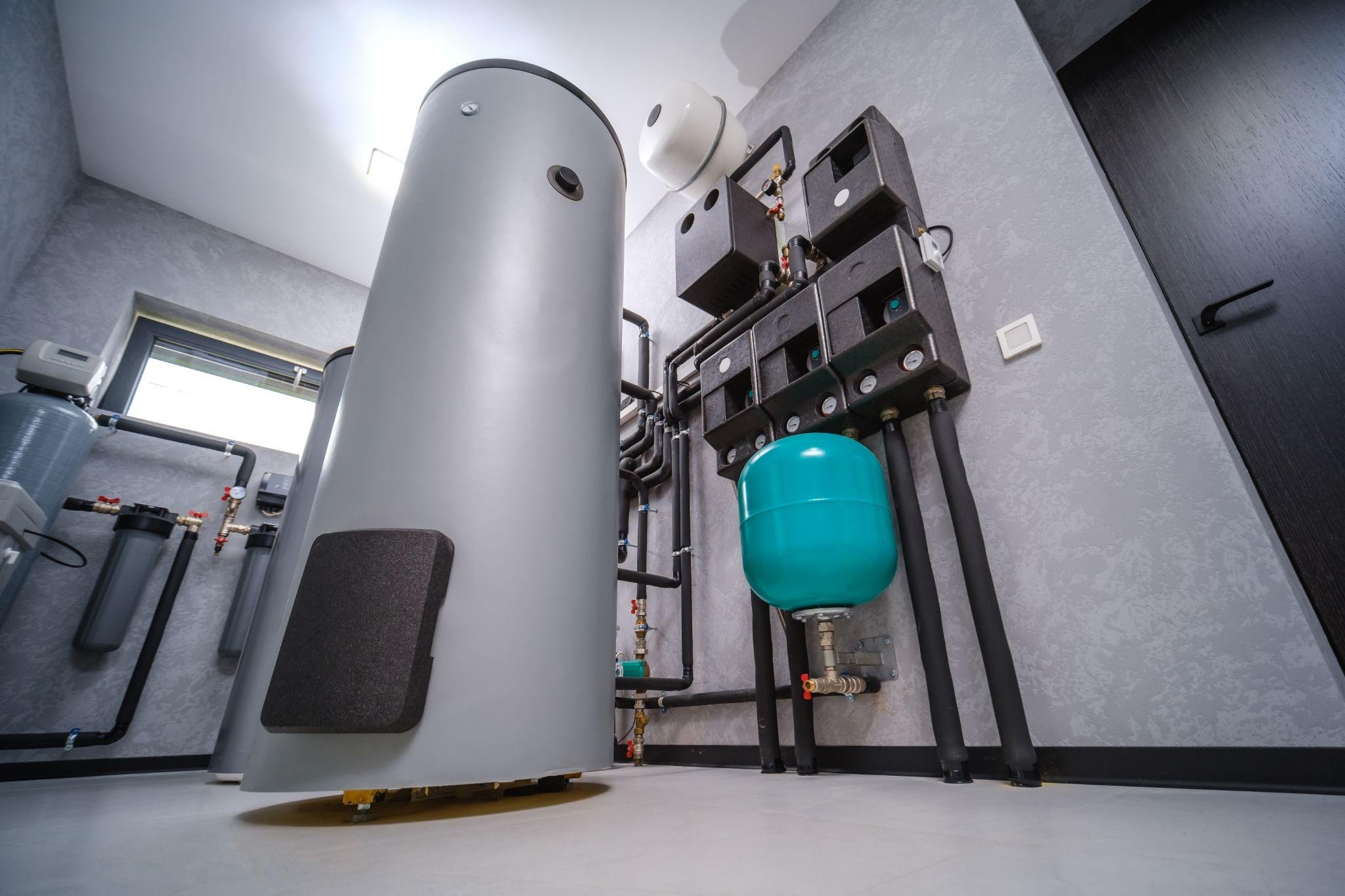
If you’re tired of running out of hot water or you’re planning a long-term upgrade, a tankless system is one of the most popular options for Las Vegas homeowners.
Tankless units heat water as you use it, which means you’re not paying to keep a full tank hot 24/7. For many families, that’s where the savings and comfort come from.
Why tankless is worth it for many Vegas homes
- Hot water that keeps up: Great for back-to-back showers and multi-bathroom homes
- Energy efficient: The U.S. Department of Energy says tankless units can be up to 34% more efficient than traditional ones.
- Long lifespan: Most last 20+ years with proper care.
- Space-saving design: Frees up garage or closet space (a big plus in Vegas layouts)
What to plan for before you upgrade
Tankless systems cost more upfront, but the long-term value is where they shine, especially if you’re staying in the home.
- Higher install cost: Around $3,000–$5,000 installed
- Maintenance matters in hard water: Plan on annual descaling (sometimes more in very hard water)
- Correct sizing is everything: The right unit depends on how many fixtures you run at once
If you’re considering tankless water heater installation in Las Vegas, this is where a pro helps most: sizing, venting, gas line checks, and setup that’s built to handle hard water from day one.
Comparing Energy Use & Costs in Real Terms
If you’re deciding between a tank or tankless water heater, the big question is simple: which one costs less to own over time?
In most homes, water heating is a major expense. The U.S. Department of Energy estimates it uses about 18% of a home’s energy. That means even small efficiency gains can add up, especially in Las Vegas (see the Vegas Factor section for how hard water affects system performance).
Why Efficiency Looks Different Between Tank and Tankless
A traditional tank heater keeps a full tank of water hot all day, even when you’re not using it. Tankless systems heat water only when you turn on the tap.
The U.S. Department of Energy notes that for homes using 41 gallons or less of hot water per day, tankless (demand) water heaters can be 24%–34% more energy efficient than standard storage tank models
That difference can save a typical Vegas household $100–$150 every year on gas or electric bills.
What That Means for Your Wallet
Tankless usually costs more upfront ($3,000–$5,000 installed), but it can return value through:
- Lower energy waste
- Longer lifespan (often 20+ years)
- Fewer “run out of hot water” moments (when sized correctly)
A traditional tank is typically cheaper to install ($1,500–$2,500 installed) and is often the quickest water heater replacement when you need hot water back fast.
Instead of promising a guaranteed payback, the most honest way to look at it is this:
If you plan to stay in your home and you use a lot of hot water, tankless often makes more sense long-term. If you want the lowest upfront cost and simpler replacement, a tank can still be a great fit.
Quick Cost Snapshot
Use this as a simple starting point (your real numbers depend on fuel type, usage, and your current setup):
- Traditional Tank: lower upfront cost, higher standby energy use, shorter lifespan
- Tankless: higher upfront cost, lower standby energy waste, longer lifespan
Rebates, Tax Credits & Incentives (When Available)
Some Las Vegas homeowners may qualify for incentives when installing high-efficiency equipment. Programs and requirements can change, so we always help confirm what applies before installation.
Federal Tax Credit (25C)
ENERGY STAR notes that ENERGY STAR-qualified tankless gas water heaters (meeting specific efficiency requirements) may be eligible for the Energy Efficient Home Improvement Credit: 30% of project cost, up to $600. The IRS also outlines the program and annual limits for home energy improvement credits.
Tip: Save your invoice and manufacturer documentation, and talk with your tax professional to confirm eligibility for your situation.
Local Utility Rebates
Local rebates may also be available depending on the equipment and program rules at the time of purchase. If you’re considering a tankless upgrade, we’ll point you to current rebate info and help you gather what you need.
The Vegas Factor: Hard Water, Energy Bills & Desert Climate
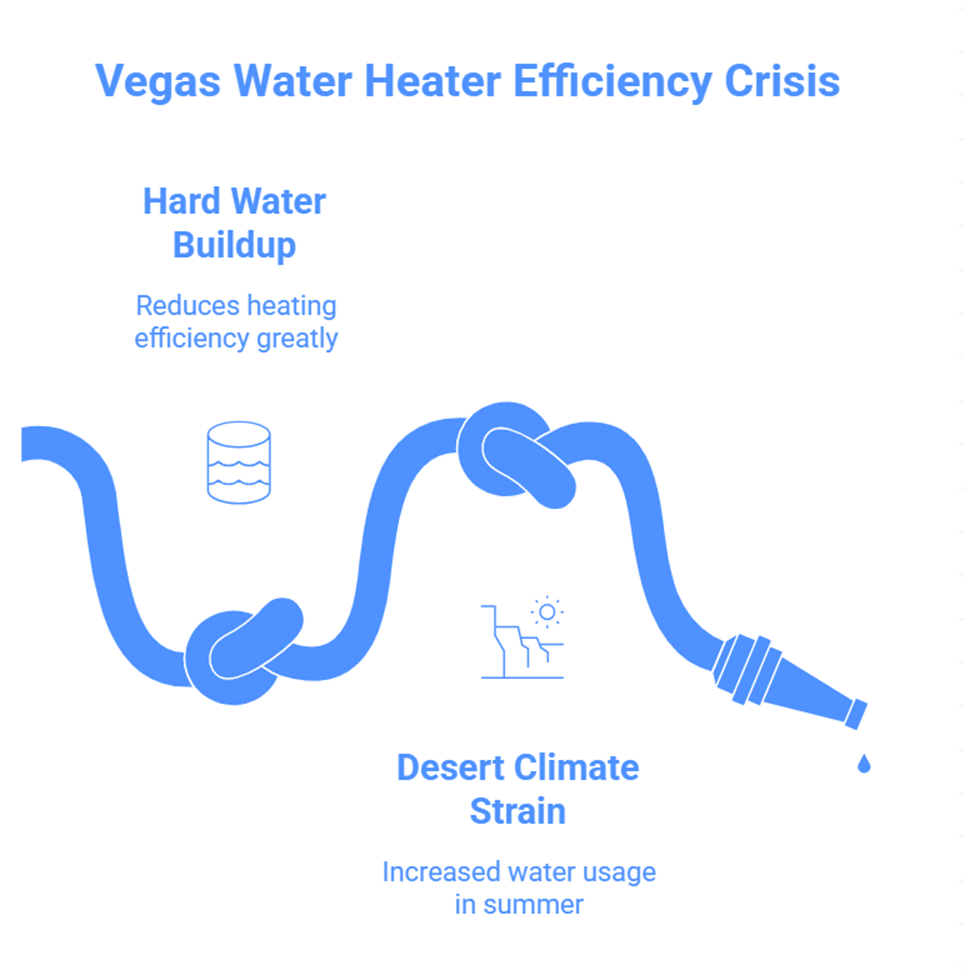
Las Vegas water heaters deal with two big challenges: very hard water and heavy daily demand. If you don’t plan for those, even a new system can lose efficiency faster than it should.
Hard Water Is the #1 Reason Water Heaters Struggle Here
When hard water is heated, minerals can stick to the inside of your system. Over time, that buildup (scale) makes your water heater work harder to heat the same amount of water.
Common signs hard water is affecting your heater:
- Hot water doesn’t last as long
- Water temperature feels less consistent
- You hear popping or rumbling from the tank
- Your energy use creeps up over time
Tank systems usually collect sediment in the bottom of the tank. Tankless systems can build scale inside the heat exchanger. Either way, maintenance is what protects your investment.
Desert Living Can Mean Higher Hot Water Demand
Vegas households often run hot water back-to-back: showers, laundry, dishwasher, especially in summer. That’s when the difference between tank and tankless becomes obvious.
- A tank can work great until you hit the limit of what’s stored.
- A tankless can keep up longer, if it’s sized correctly for how many fixtures you run at once.
Simple Protection That Helps Either System
If you want your next water heater to last longer and run more efficiently:
- Flush tank water heaters to reduce sediment buildup
- Descale tankless systems on schedule to prevent scaling
- Consider a water softener or filtration system if mineral buildup is already a problem in your home
Now that you know what Vegas conditions do to water heaters, the next step is sizing. Even the best system won’t perform well if it’s undersized or if it’s not matched to how your household actually uses hot water.
Sizing Your Water Heater the Right Way
Even the best energy-efficient water heater won’t perform well if it’s not the right size for your home.
Proper sizing means you’ll always have enough hot water — without wasting energy or paying for a system that’s too big.
How Tank Water Heaters Are Sized
Tank systems are sized by capacity and measured in gallons.
Common sizes are 40, 50, or 75 gallons.
- A 40-gallon tank fits a small household (1–2 people).
- A 50-gallon tank works for most families of 3–4.
- Larger families or homes with soaking tubs may need 75 gallons or more.
If you’ve ever had a shower turn cold while running the dishwasher, your current tank may be too small.
How Tankless Water Heaters Are Sized
Tankless systems are sized by flow rate, measured in gallons per minute (GPM).
That’s how much hot water they can deliver at once.
Here’s a simple example:
- Shower: ~2 GPM
- Dishwasher: ~1.5 GPM
- Washing machine: ~2 GPM
If you often run all three, you’ll need a tankless unit that can handle 5.5–6 GPM to keep your water hot.
The Vegas Advantage
Because many Las Vegas homes are two-story or have multiple bathrooms, it’s common to install two smaller tankless units instead of one large one.
That setup delivers faster hot water to every part of your home and reduces the “cold water sandwich” effect some older systems have.
At Pure Plumbing & Air, our licensed technicians don’t guess; they measure your household’s actual water use and recommend the right system for your lifestyle.
Installation Insights: What to Expect and What to Avoid
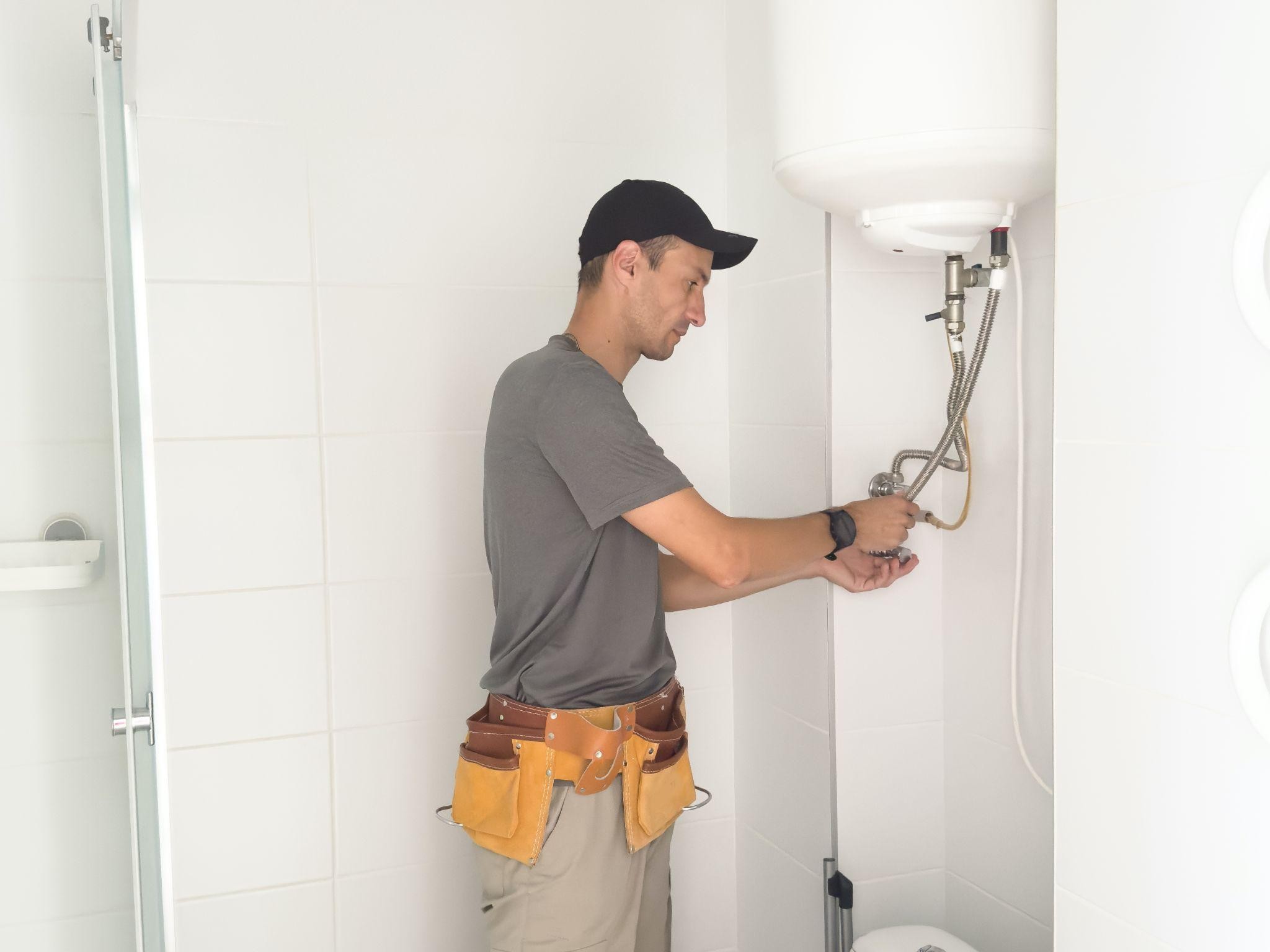
Replacing a water heater is one of those jobs best left to the pros. It’s not just about connecting pipes but involves gas lines, venting, drainage, and safety codes that vary by home and city.
When you schedule a tank or tankless water heater installation with our Las Vegas plumbing experts, here’s what to expect:
1. Inspection and Honest Options
First, a licensed technician will inspect your old system. They’ll check the tank for leaks, test the pressure, and make sure your gas or electrical lines are safe.
Then, you’ll get a few options that fit your home and budget, often tiered from good, better, and best models.
We explain what each one means for energy savings, lifespan, and cost, so you can decide with confidence.
Real Example: Kevin McVay, one of our customers, called when his garage tank started leaking.
“Sheri on the phone was kind and got me same-day service,” he wrote. “Alex, the technician, showed me three pricing options and installed the new tank that same afternoon.”
Kevin later found out from other plumbers that the installation was up to code and professionally done.
2. Safe Removal and Prep
Once you choose your new system, the old one is drained and safely removed.
If you’re switching from a traditional tank to a tankless model, we’ll also inspect your gas line, venting, and plumbing connections.
Las Vegas homes vary; some need small upgrades for safety or efficiency.
We also make sure your drain pan, shut-off valve, and straps are in good shape and meet local code.
3. Installation and Testing
Next comes the setup.
- The new water heater is connected to gas, power, and water lines.
- Every joint is checked for leaks.
- We test your hot water temperature, flow, and pressure.
- For tankless systems, we verify that the burners or heating elements respond instantly.
Before we leave, we make sure everything is working perfectly and that you know exactly how to use your new system.
4. Clean-Up and Walkthrough
We leave your space cleaner than we found it.
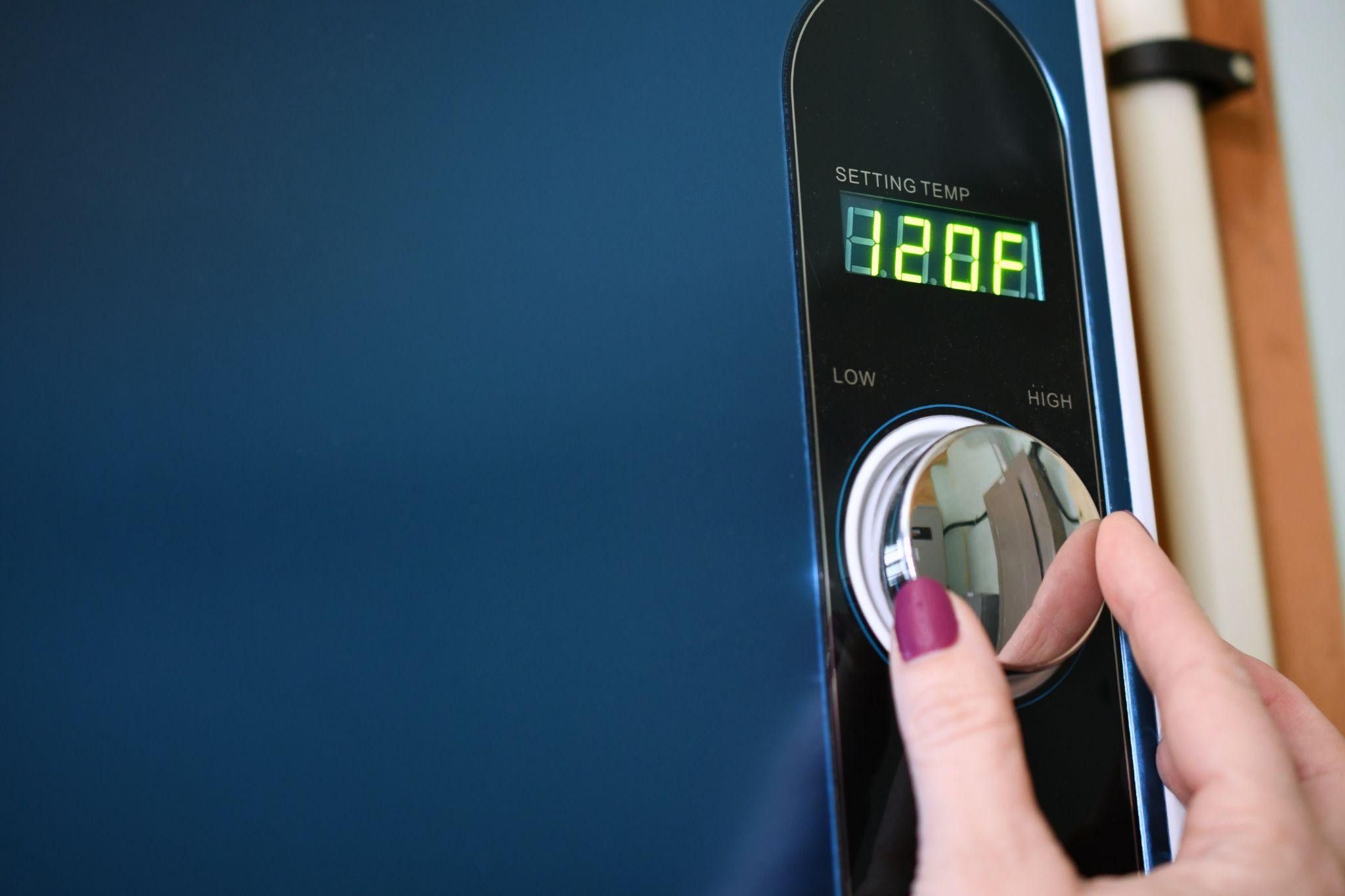
Your technician will show you how to adjust the temperature, reset the system, and handle basic maintenance like flushing or filter cleaning.
Kevin mentioned that Alex even let him watch part of the job so he could learn a few do-it-yourself tips:
“He explained what he was doing, replaced pipes and straps, and cleaned up completely before leaving. The work looked professional, and two other plumbers said it was excellent.”
That’s what professional water heater installation in Las Vegas should feel like: clear communication, safe work, and pride in the final result.
Maintenance That Pays Off
In the Las Vegas, local water conditions make maintenance especially important. Whether you have a tank or tankless water heater, a little care saves you money and helps your system last much longer.
If You Have a Tank Water Heater
Your system should be flushed once a year to remove sediment that settles at the bottom.
Sediment acts like insulation, making it harder for the heater to warm your water. That wastes energy and shortens the life of the tank.
You’ll also want to replace the anode rod every few years. This metal rod attracts corrosion and protects the inside of the tank from rusting.
If You Have a Tankless Water Heater
Tankless systems need to be descaled annually, sometimes twice a year if your home has very hard water. Descaling removes mineral buildup inside the heat exchanger, keeping your system efficient and your water flow strong.
You should also clean or replace the small inlet filter that traps debris before it enters the heater.
Add-On Protection for Vegas Homes
Many homeowners install a water softener or filtration system alongside their water heater.
This reduces mineral buildup, keeps appliances running better, and makes maintenance easier.
Pure Care Membership
Our Pure Care Membership makes upkeep easy.
Members get:
- An annual water heater flush (tank or tankless)
- Priority scheduling for repairs
- Discounts on parts and labor
- And reminders when it’s time for service
That small step protects your system and keeps your home running smoothly year-round.
Customer Proof: Rosemary, a Las Vegas homeowner, shared how our team handled multiple home repairs before she sold her house.
“Everyone was polite, well-mannered, and honest. They even took $458 off my bill after realizing one part wasn’t needed. I’ve heard horror stories about home repairs, but Pure Plumbing made it easy and stress-free.”
That’s our goal, helping homeowners feel cared for, not pressured.
Real Home Example: From Frustration to Flow
When Kevin discovered a growing leak in his garage, he didn’t have time to shop around. His old tank was rusted and already dripping.
He called Pure Plumbing & Air early that morning—and had a brand-new water heater by dinner.
“Sheri on the phone was so kind and understanding. She sent a tech the same day. Alex replaced the old heater, refitted the pipes, and cleaned everything up. I even got to watch and learn a bit.”
Kevin mentioned the job was more expensive than smaller companies—but said the peace of mind was worth it:
“Knowing it was done right, up to code, and fast made all the difference. I’d rather pay a little more once than deal with another leak later.”
That’s a common story in Vegas homes—when something fails, speed and quality matter most.
Our goal is to get your hot water back on quickly, safely, and with long-term reliability.
The Verdict: Which Water Heater Is Right for You?
Both tank and tankless water heaters can work well, but it depends on your family, your home, and your goals.
| Your Situation | Best Option | Why |
| You want the lowest upfront cost | Traditional Tank | Simple, affordable replacement |
| You have a big family or long showers | Tankless | Endless hot water, better energy use |
| You plan to stay in your home long-term | Tankless | Lasts twice as long and saves on bills |
| You need a quick replacement before moving | Tank | Fast, budget-friendly option |
| You want more garage space or a cleaner look | Tankless | Compact wall mount frees floor space |
If your current water heater is over ten years old, making noise, or leaving rusty water, start planning your upgrade before it leaks.
Replacing it on your schedule, not during an emergency, lets you choose the best system for your home.
FAQ: Tankless Water Heater Installation in Las Vegas
How much does tankless water heater installation cost in Las Vegas?
Most homeowners spend $3,000–$5,000, depending on your home’s gas line, venting needs, and how much hot water your household uses.
How long does tankless installation take?
A traditional tank swap often takes about half a day. Tankless installs usually take 6–8 hours, because they may require additional venting and setup.
Can I install a tankless water heater myself?
It’s not recommended. Tankless units can require specialized venting plus gas and electrical connections, and warranties often expect professional installation.
Do tankless water heaters work during a power outage?
Most gas tankless units still need a small amount of electricity for ignition and controls. A battery backup or generator can keep them running.
How long do tankless water heaters last in Las Vegas?
In Las Vegas, lifespan depends heavily on maintenance. Tankless units can last 20+ years, but only if they’re descaled regularly to prevent mineral buildup from hard water. Without proper care, performance and longevity can drop much sooner.
What’s the best way to protect a new tankless unit from Las Vegas hard water?
Plan on regular maintenance and consider a water softener or filtration system to reduce mineral buildup.
How often does a tankless water heater need descaling in Las Vegas?
Typically once per year: sometimes twice per year in very hard water—so scale doesn’t build up inside the heat exchanger.
What size tankless water heater do I need?
Sizing is based on flow rate (GPM)—how many fixtures you run at once. For example, if you commonly run a shower, dishwasher, and washing machine together, you may need roughly 5.5–6 GPM (depending on temperature rise).
How do I decide between a traditional tank vs. tankless?
If you want the lowest upfront cost and a straightforward water heater replacement, a traditional tank can be a good fit. If you want back-to-back showers and better long-term value (and you’re okay with descaling), tankless is usually the better upgrade.
Your Las Vegas Water Heater Experts
When your water heater fails, it can turn your day upside down. But with Pure Plumbing & Air, you’re never on your own.
Our licensed, local team is available 7 days a week for fast, reliable water heater service, whether you need an emergency replacement, routine maintenance, or a full tankless water heater installation in Las Vegas.
We’ll walk you through your options, explain the costs clearly, and help you take advantage of rebates and financing that fit your budget.
Ready to feel confident about your home’s hot water again?
Call Pure Plumbing & Air today or schedule your free consultation online. We’ll help you choose the right water heater and keep your home comfortable year-round.