
AC Refrigerant Leak Repair in Enterprise, NV
- 24/7 Emergency Service
- Financing Available
- A+ BBB Rated
- Licensed & Insured
Signs Your Enterprise AC Has a Refrigerant Leak
A low charge changes how the whole system behaves, and the signs build over weeks. Catching them early protects the compressor and stops the slow drain. Watch for these:
- Cooling has weakened slowly while run times have grown
- Ice forms on the copper lines or the indoor coil
- A hissing or bubbling sound near the lines or coil
- Warm air from the vents while the system runs constantly
- Energy bills climbing without a clear reason
- A recent recharge that did not last the season
Enterprise systems run long hours through extreme heat, and years of vibration plus desert corrosion open small leaks at joints and coils. A recharge that fades within a few months, common in older systems around Silverado Ranch and Rhodes Ranch, is the clearest sign a real leak is present rather than a one-time low charge.
Where Refrigerant Leaks Start and How They Are Found
A leak repair is only as good as the leak search behind it, so the work begins by locating every leak before sealing anything.
Coils, line sets, and joints
Leaks most often start at the evaporator coil, the condenser coil, the line set, or the brazed and flared joints that connect them. Vibration and corrosion open these over time.
Electronic detection, UV dye, and nitrogen testing
A technician locates leaks with an electronic detector, with UV dye that glows at the leak, and with a nitrogen pressure test that reveals leaks the system pressure hides. A standing vacuum test confirms the system holds after the repair. Using more than one method catches leaks a single tool would miss.
Why topping off without a repair fails
Adding refrigerant to a leaking system restores cooling for a short time, then the charge bleeds out again. Repeated top-offs cost money and let the compressor run low and hot. Sealing the leak is the only lasting fix.
Formicary corrosion in the evaporator
Indoor air chemistry can pit the evaporator copper with microscopic pinholes that drain the charge slowly. These are hard to find and often mean a coil replacement.
R-22, R-410A, and the R-454B transition
Older systems may use R-22, which is no longer produced and is costly to source. Newer equipment is moving to low global-warming refrigerants such as R-454B. The technician matches the recharge to the system’s refrigerant on the systems we service. R-22 units are not recharged or refilled; we advise on replacement instead.
Recharging to the correct weight
After the leak is sealed and the system is evacuated, the charge is added back by weight to the manufacturer’s specification, then verified by subcooling and superheat. A charge set by weight and reading is accurate, unlike a guessed top-off.
Related Repairs Worth Looking At
A refrigerant leak connects to a few related repairs, since the leak usually sits in a coil or causes a freeze.
-
Evaporator Coil Repair
The evaporator coil is one of the most common leak points, and a corroded coil often needs replacement. The coil service covers detection and matched replacement.
See Details
-
Frozen AC Repair
A low charge from a leak is a leading freeze cause. The frozen AC service covers the thaw and the triage behind the ice.
See Details
-
AC Compressor Repair
Running low on refrigerant makes the compressor run hot and shortens its life. The compressor service covers that risk.
See Details
-
Whole-System AC Repair
For cooling faults outside the refrigerant circuit, the broader AC repair service covers the rest of the system.
See Details

The Calls We Get Most Often in Peak Summer
Most refrigerant calls in Enterprise follow a few patterns.
- Cooling has faded over weeks and the system never reaches setpoint
- A recharge from earlier in the year has already worn off
- Ice is on the lines and a hissing sound comes from the coil
Letting a leak run is what raises the cost. A system low on charge runs the compressor hot, ice can damage the coil, and repeated top-offs add up while the leak grows. Finding and sealing the leak early protects the compressor and ends the cycle of refills.
From Diagnostic to Cold Air, Step by Step
- The technician confirms the symptom and reads system pressures and temperatures to confirm the charge is low.
- A leak search uses electronic detection, UV dye, and a nitrogen pressure test to locate every leak point.
- The leak is sealed by repairing the joint or line, or by replacing a leaking coil, and a standing vacuum test confirms the system holds.
- The system is evacuated to remove air and moisture, then recharged by weight to the manufacturer’s specification.
- The charge is verified by subcooling and superheat, the system runs under load, and a healthy temperature split is confirmed before the technician leaves.
Service Areas Across Enterprise and the Southwest Valley
Pure Plumbing & Air dispatches from its East Sunset Road shop to diagnose low refrigerant, coil leaks, or line-set damage at your home. Same-day refrigerant leak repair reaches homeowners across:
- Enterprise
- Mountain’s Edge
- Southern Highlands
- Silverado Ranch
- Rhodes Ranch
- Spring Valley
- Las Vegas Valley
If your neighborhood is not listed here, call and a dispatcher can confirm availability for your address.

What Sets Pure Plumbing & Air Apart on Leak Repairs
Not every company takes the time to find a leak before adding refrigerant, and a top-off without a repair is a refill you pay for again next month. Pure Plumbing & Air has worked on valley systems since 2013 and holds Nevada license #77906 and #88741, and its technicians handle refrigerant under EPA Section 608 certification as required by law. The team locates leaks with multiple methods, seals them, evacuates the system, and charges by weight rather than by guess. The company runs 24/7 emergency service for the no-cool calls a leak can cause, and Pure Plan membership adds the seasonal checks that catch a small leak before it drains the system.
- Licensed in Nevada, #77906 and #88741
- EPA Section 608 certified technicians
- Serving the valley since 2013
- Electronic, UV dye, and nitrogen pressure testing
- Evacuation and recharge to weight on every sealed repair
- 24/7 emergency availability
- Pure Plan membership for seasonal checks and priority service
Refrigerant Leak Repair FAQs for Enterprise, NV
Seal the Leak, Not Just the Symptom
Weak cooling and a recharge that fades both point to a leak that needs sealing, not another refill. Pure Plumbing & Air finds every leak, seals it, evacuates the system, and recharges to the correct weight before confirming real cooling.
HVAC Services We Offer Includes:
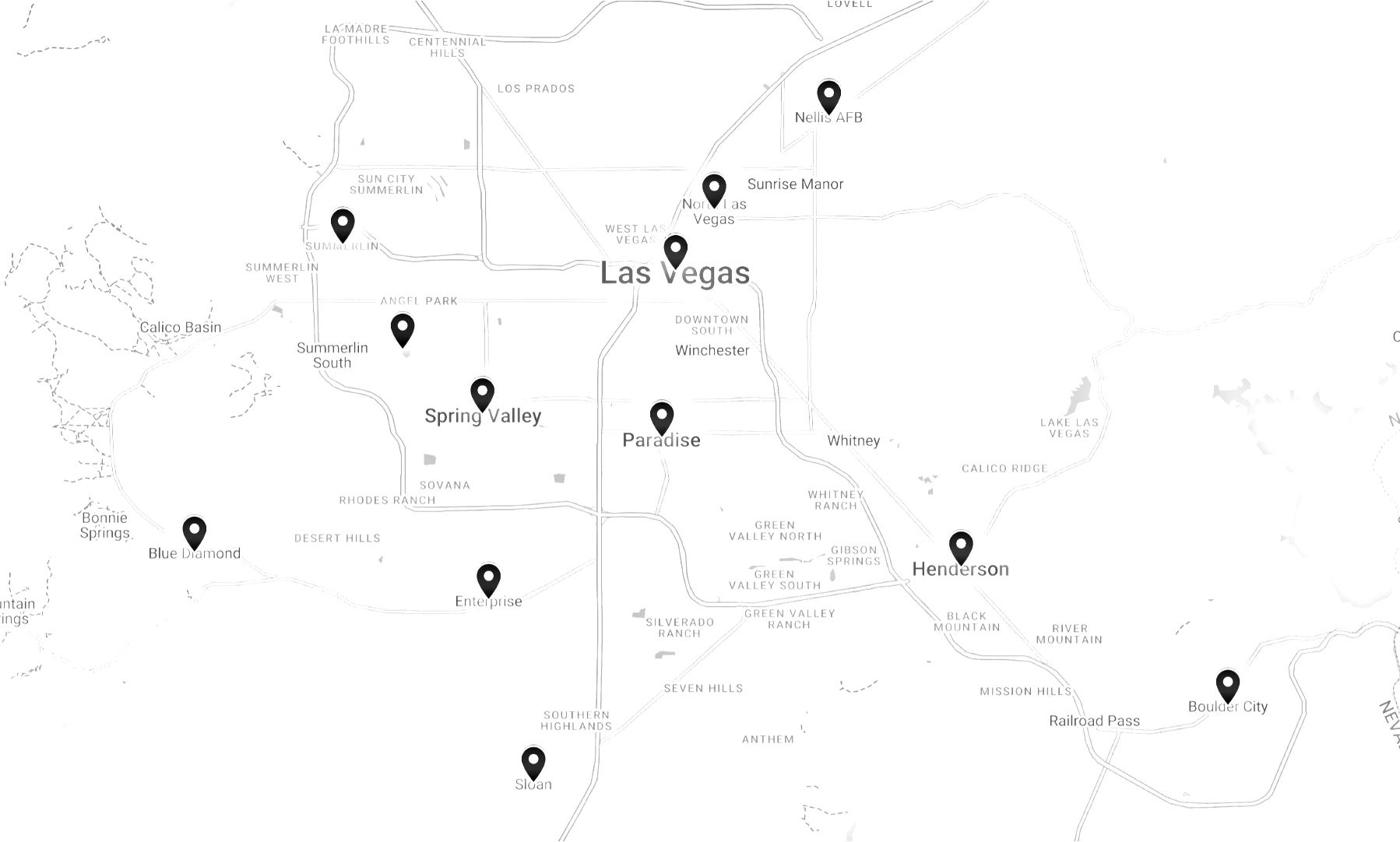
We serve the whole Las Vegas valley All 17 areas
AC Refrigerant Leak Repair in Enterprise, one stop on a valley-wide route. We carry the parts these systems actually fail on, so most repairs finish in one visit.
West valley
North valley
East & south