
AC Capacitor Repair in Boulder City, NV
- 24/7 Emergency Service
- Financing Available
- A+ BBB Rated
- Licensed & Insured
Signs Your Boulder City AC Has a Start-Component Fault
The capacitor and the contactor fail more often than any other electrical part in a desert condenser, and both tend to warn you before they quit for good. Spotting the pattern early is the difference between a quick, low-cost part swap and a burned-out motor.
- A humming AC unit outside while nothing spins and no cool air reaches the vents
- The AC won’t start when the thermostat calls, though the indoor blower may still run
- A repeated click at the outdoor unit, where the AC clicks but won’t turn on
- The condenser fires up, runs a short while, then shuts down and tries again
- A domed or weeping capacitor top, the classic swollen capacitor
- A scorched smell or blackened terminal at the switch, the mark of a burned contactor
- The breaker trips the instant the outdoor unit tries to start on a hot afternoon
Boulder City sits higher and a touch cooler than the Las Vegas floor, but July still holds well past 100 degrees, and a condenser here runs long hours against that load. The larger factor is age. Growth restrictions have preserved a housing stock full of mid-century homes, and cooling systems retrofitted onto that older wiring lean hard on their capacitors and contactors. Heat breaks down a capacitor’s internals while years of switching cycles wear a contactor’s points, and on original equipment both reach the end of their life sooner than a spec sheet would predict.

The Difference Between a Dead Capacitor and a Worn Contactor
Nearly every no-cool call begins with these two parts, because they are inexpensive, they share the outdoor cabinet, and they carry enough voltage that testing belongs to a technician rather than a homeowner. They do different jobs and they fail in different ways, so a real diagnosis separates them before anything is replaced. A proper capacitor & contactor repair starts with a meter, not a parts swap.
-
A run capacitor that has drifted below spec
A weak start capacitor has lost part of the stored charge that gives the motors their turning force, so the compressor or fan can no longer spin up cleanly and drops out on its internal overload. Most homes use a single dual run capacitor that serves both motors at once, which is why one failed part can strand the whole condenser. A bulged or leaking top makes a failure obvious, but plenty of capacitors read low on a meter while looking perfectly intact.
-
A contactor that no longer switches cleanly
The contactor is the heavy-duty switch that passes full power to the condenser when the thermostat asks for cooling. Over thousands of cycles its contact points pit, carbonize, and eventually stick or refuse to close, and a contactor replacement restores a clean, positive switch. A contactor welded shut will run the unit nonstop after the house is already cool, while a coil on its way out chatters and half-starts until it quits entirely.
-
Old wiring and hard summers, working against the parts
Retrofitted cooling on original mid-century circuits is common in the historic core, and aging disconnects and undersized wiring make the start components work harder than they should. The dry heat that rolls in off the Eldorado Valley bakes the outdoor cabinet all afternoon, and monsoon-season voltage dips add strain to a compressor already leaning on a tired capacitor. On equipment this age, a failing part rarely fails by itself.
-
A boost for tired older compressors
An aging compressor that hesitates on startup pulls a heavy surge even when the capacitor is sound. A hard start kit adds a start capacitor and relay that give the motor a brief, strong push to break free, then drop back out of the circuit. On the older systems common here, it is an inexpensive way to buy dependable seasons out of equipment that is not ready for replacement.

The Repairs That Cluster Around a Bad Capacitor
A failed start component rarely travels alone, because the weak part strains everything it feeds. These related services often come up on the same visit or a quick follow-up.
-
Condenser fan motor repair
A fan that spent weeks fighting a dying capacitor can turn up with cooked windings or worn bearings of its own. If the blade still drags after a fresh capacitor goes in, the motor is the next thing tested.
See Details
-
AC compressor repair
Every failed start against a dead capacitor forces a hard current surge through the compressor. When a unit has been straining for days, a compressor health check confirms whether the small part failed alone or dragged the expensive one down with it.
See Details
-
Full AC repair
When testing clears the electrical parts, the real fault sits elsewhere, in the refrigerant charge, the airflow, or the controls, and full air conditioning service covers the rest of the system.
See Details
-
Emergency AC repair
A capacitor that quits on a holiday weekend cannot wait for a weekday appointment. After-hours dispatch covers urgent electrical failures with trucks stocked for same-visit replacement.
-
HVAC contractor services
Start-component work is one slice of the full range of heating and cooling the licensed team handles across the area, up through complete system replacement.
The Price of Running It Until It Dies
It is tempting to keep running a unit that still limps along, but a weak capacitor or a burned contactor trades a small repair for a large one. Each strained start pushes heavy current through the compressor and builds heat in the windings, and across a stretch of triple-digit days that damage compounds fast. A contactor welded closed keeps the compressor running with no rest at all. Because Boulder City sits a fair drive from the nearest supply house, a rushed fix with a mismatched part usually fails again and ends up costing more than the correct repair would have. Replacing the failing part at the first symptom is the affordable version of this job.
Inside a Capacitor and Contactor Service Call
Every visit follows the same disciplined order, built to protect both the homeowner and the surviving parts of the system.
- The technician confirms the reported symptom at the thermostat and the outdoor unit, noting whether the blower runs, whether the fan turns, and how the condenser behaves on a start attempt.
- Power is shut at the disconnect and the capacitor is safely discharged before anything is opened, since it holds a dangerous jolt long after the unit is switched off.
- The capacitor is metered against its labeled rating and the contactor is examined for pitting, coil strength, and debris in the moving armature, so only genuinely failed parts are replaced.
- Failed components are swapped for stock matched to the nameplate on microfarad value, voltage, pole count, and amperage, and the wiring is returned to its factory terminals.
- Power is restored, the unit runs under load, and starting behavior and current draw are checked, so you leave with a clear picture of what failed and what the repair corrected.
Reaching Boulder City From the Shop
Pure Plumbing & Air runs as a service-area company from a single shop on the Las Vegas side, with trucks reaching Boulder City in a routine scheduled window, usually inside about half an hour. Same-visit capacitor and contactor service covers homes throughout the city and the surrounding Henderson and Lake Mead corridor. If an address sits at the edge of that range, a quick call to the dispatcher confirms coverage.

Tested, Matched, and Verifiable
The failure mode that costs homeowners money is a company that swaps parts on a guess, or fits a close-enough capacitor that runs hot and quits by August. Pure Plumbing & Air meters every part before replacing it and matches the replacement to the nameplate, so the fix lasts the season. The company has serviced valley air conditioners since 2013 and holds Nevada licenses #77906 and #88741, verifiable through the Nevada State Contractors Board, which holds the work to state standard.
Service runs 24/7 for the after-hours failures that always seem to land on the hottest evenings, and a Pure Plan membership adds a seasonal tune-up that tracks capacitor readings over time to catch a drifting part before it strands the house. The company carries positive reviews across the valley for straight diagnostics and upfront pricing.
Capacitor and Contactor FAQs for Boulder City, NV
One Meter Test Away From Cold Air
A humming condenser or a clicking contactor is usually a single test away from an answer, and the fix is often the cheapest repair on the system. Pure Plumbing & Air meters and replaces failed capacitors and contactors for Boulder City homes with spec-matched parts, usually in one visit, with cooling confirmed under load before the truck leaves. Call (725) 210-6034 to schedule your diagnostic.
HVAC Services We Offer Includes:
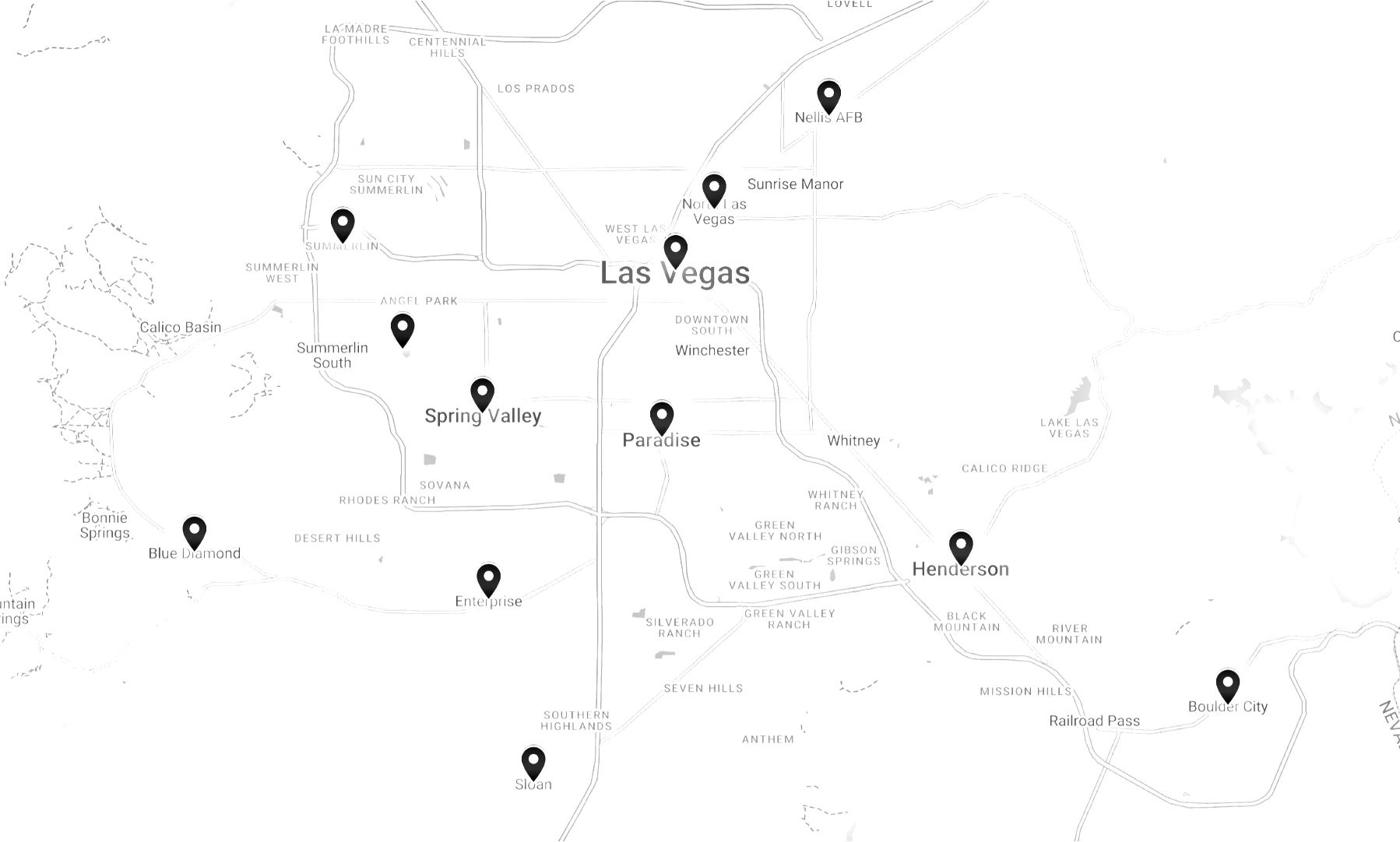
We serve the whole Las Vegas valley All 17 areas
AC Capacitor Repair in Boulder City, and across every area on this list. Eight to nine months of run time a year is hard on equipment anywhere in this valley.
West valley
North valley
East & south